A Field Journey with the Kākāriki Karaka: Working with the Team who Conserve Aotearoa’s Rarest Parakeet
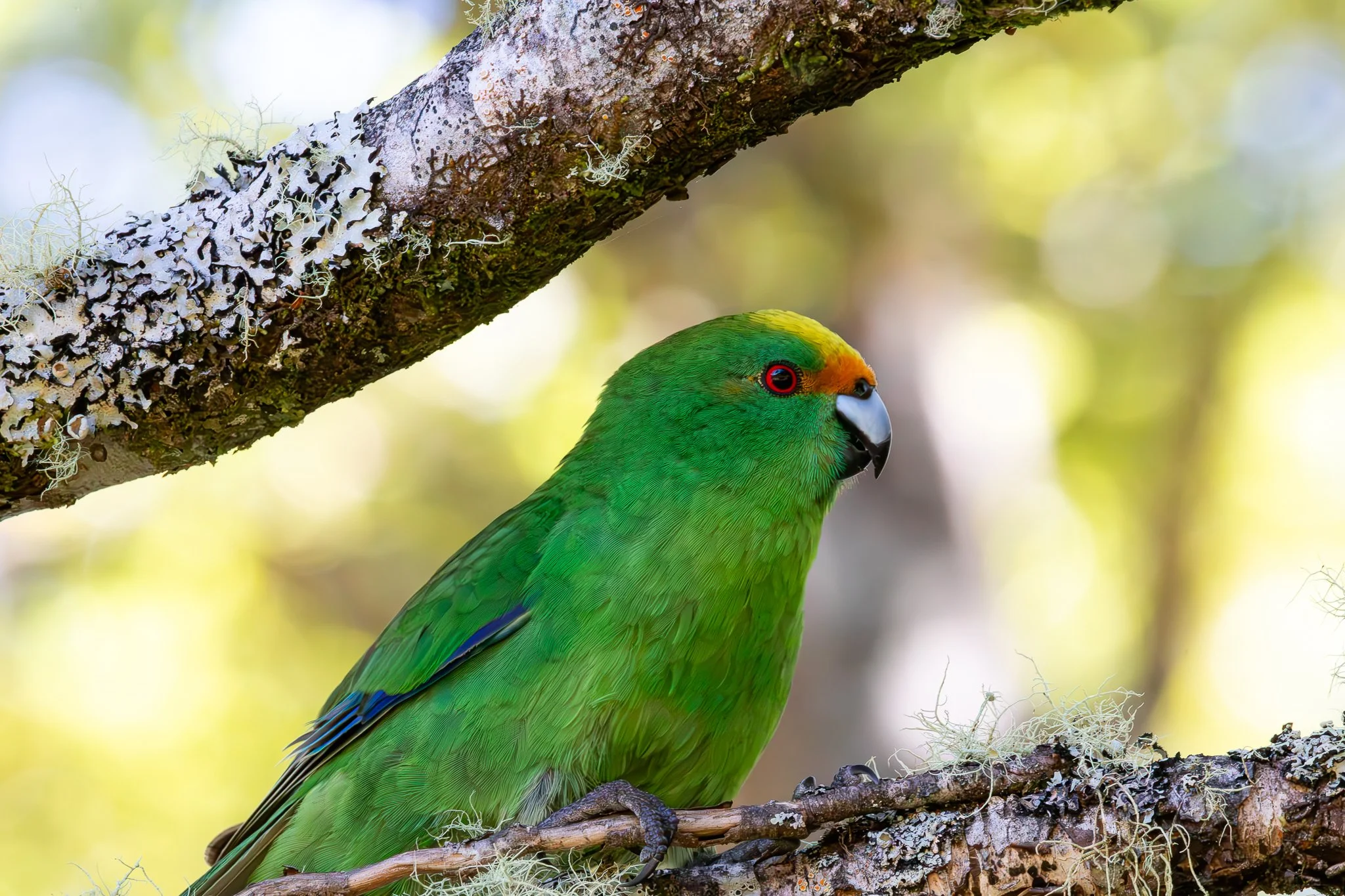
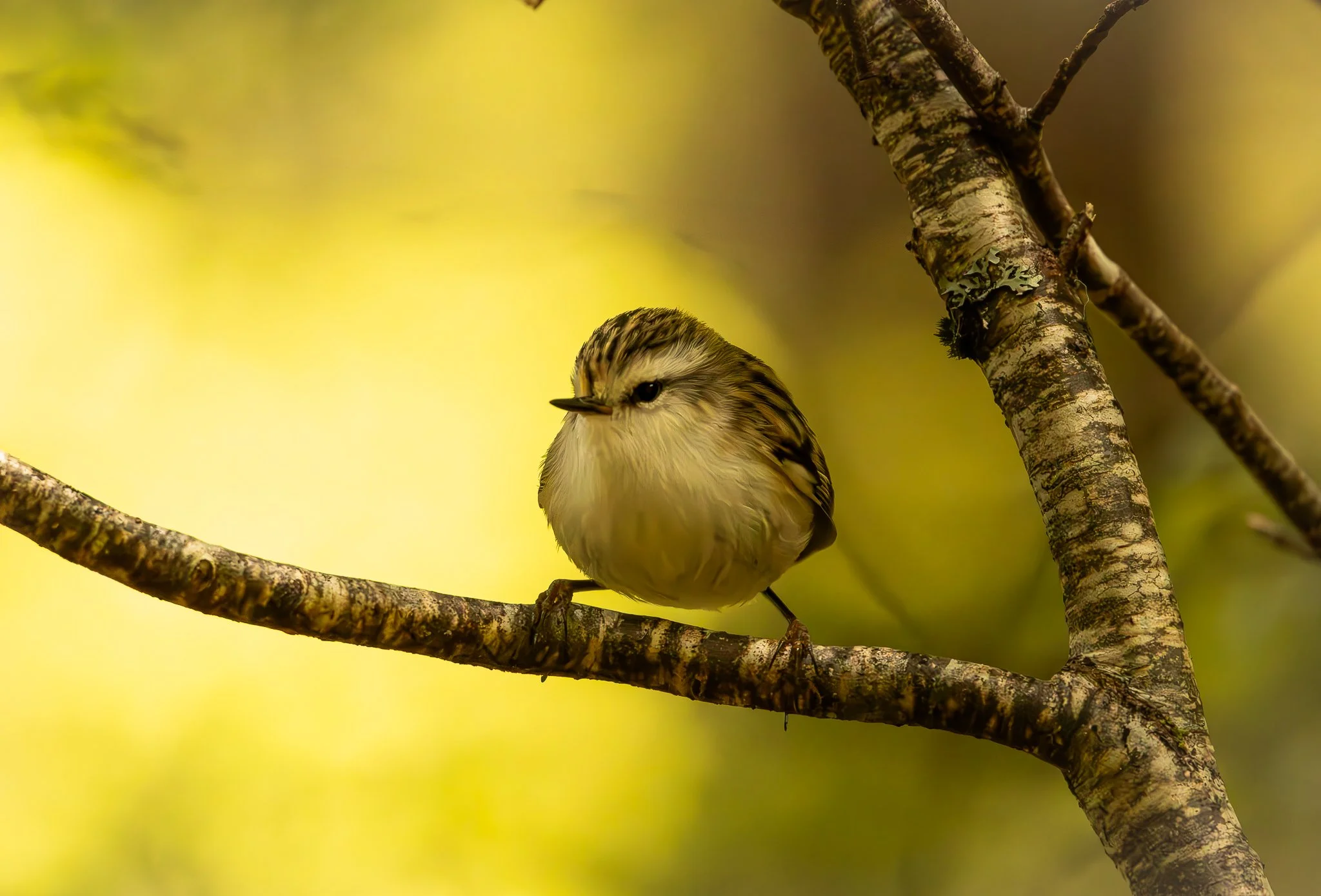
The star of the show, the Kākāriki Karaka or orange-fronted parakeet. [1/250, f13, ISO6400]
In late 2024, I had the privilege of joining the Department of Conservation (DOC) Kākāriki Karaka team on a survey and monitoring trip into the Hawdon Valley, nestled within Arthur’s Pass National Park. My role for the weekend was to document the remarkable birdlife of this remote wilderness, creating a photographic library that could support ongoing conservation and public engagement efforts.
The kākāriki karaka, or orange-fronted parakeet (OFP), is one of New Zealand’s most critically endangered bird species. Declared extinct twice—first in 1919 and again in 1965—these small, vibrant green parrots have demonstrated remarkable resilience, with isolated populations managing to survive in the secluded beech forest valleys of Canterbury and Nelson. Today, the species is listed as Nationally Critical under New Zealand’s threat classification system. The primary threats to its survival remain habitat degradation and predation by introduced mammals.
On a Friday afternoon, after wrapping up my regular field work in Christchurch, I drove 90 minutes inland to the base of the Hawdon Valley. There, I was warmly welcomed with a lift in a Light Utility Vehicle (LUV)—a relief after a long day and with a heavy pack, loaded with camping and camera gear. Thanks to Kate for the ride; crossing rivers and winding up the valley as the sun was going down was an exhilarating start to the weekend.
Upon reaching the DOC field base, I quickly set up camp and ventured into the forest to get an early start on my photography. As we ascended one side of the valley, we were greeted by the calls of riroriro (grey warbler), kākā (forest parrot), and, most excitingly, kākāriki karaka. Unfortunately, the elusive parakeets stayed out of range, and most other birds were settling in for the evening. On our return to camp, however, we were surprised by the distinct call of a koekoeā (long-tailed cuckoo)—a first for me. Despite our attempts to locate it, the bird remained hidden, but the encounter marked a promising start to the trip.
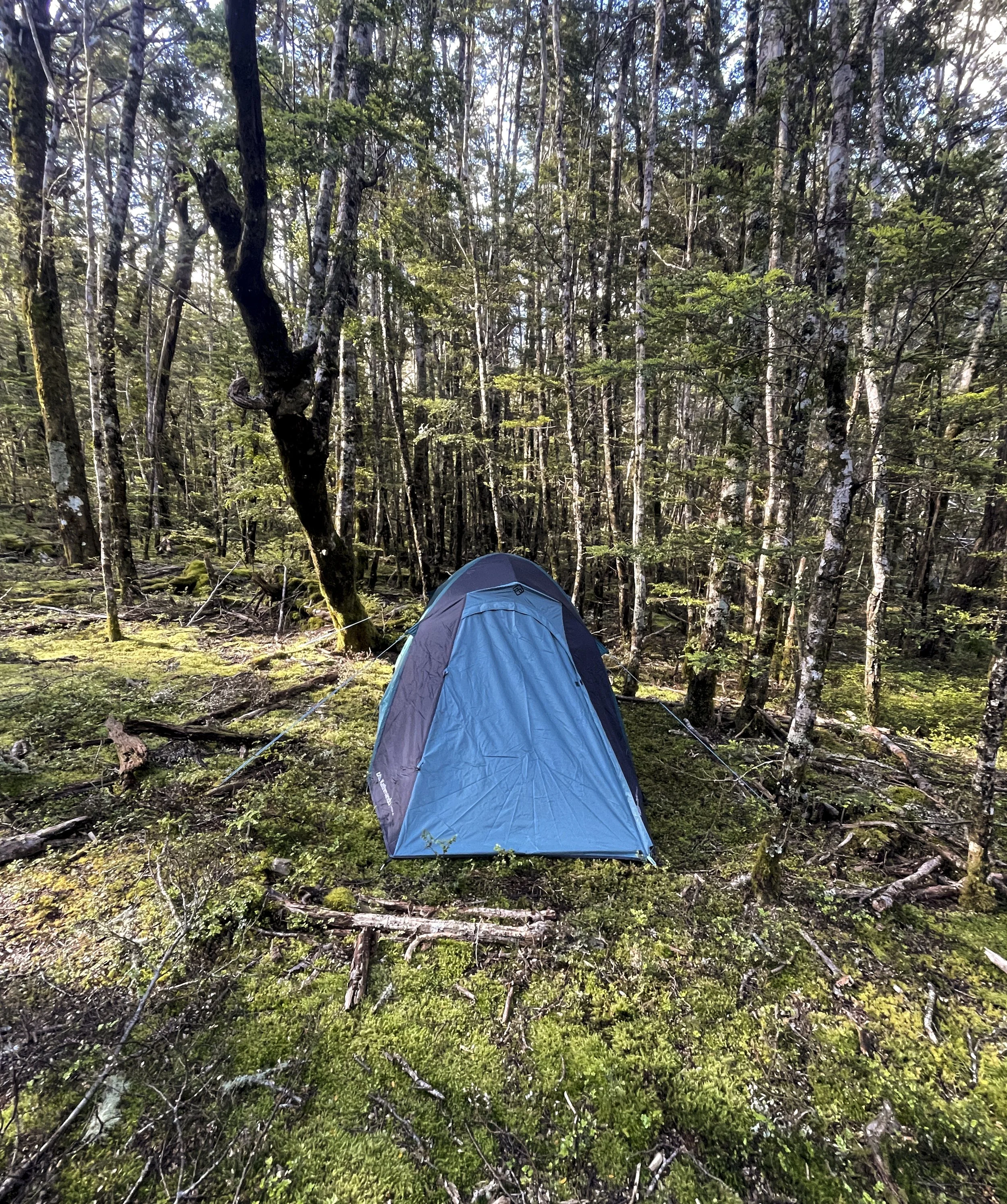
My humble campsite for the weekend. You couldn’t ask for a better spot if you ask me!
The next morning, I awoke to the dawn chorus—this time, featuring both mohua (yellowhead) and kākāriki karaka. While I had seen the latter on a previous trip, the mohua had been on my must-see list for as long as I could remember. Catching flashes of their bright yellow plumage high in the canopy was a thrilling first sighting, even if my camera stayed unused.
After a quick breakfast and safety briefing, I joined an experienced DOC staff member for the day’s survey. As we trekked deeper into the valley, we passed signs of other rare inhabitants—most notably the tracks of roroa (great spotted kiwi), imprinted clearly in the dirt. Such evidence portrayed the ecological richness of this landscape and hinted at the wildlife encounters that lay ahead.
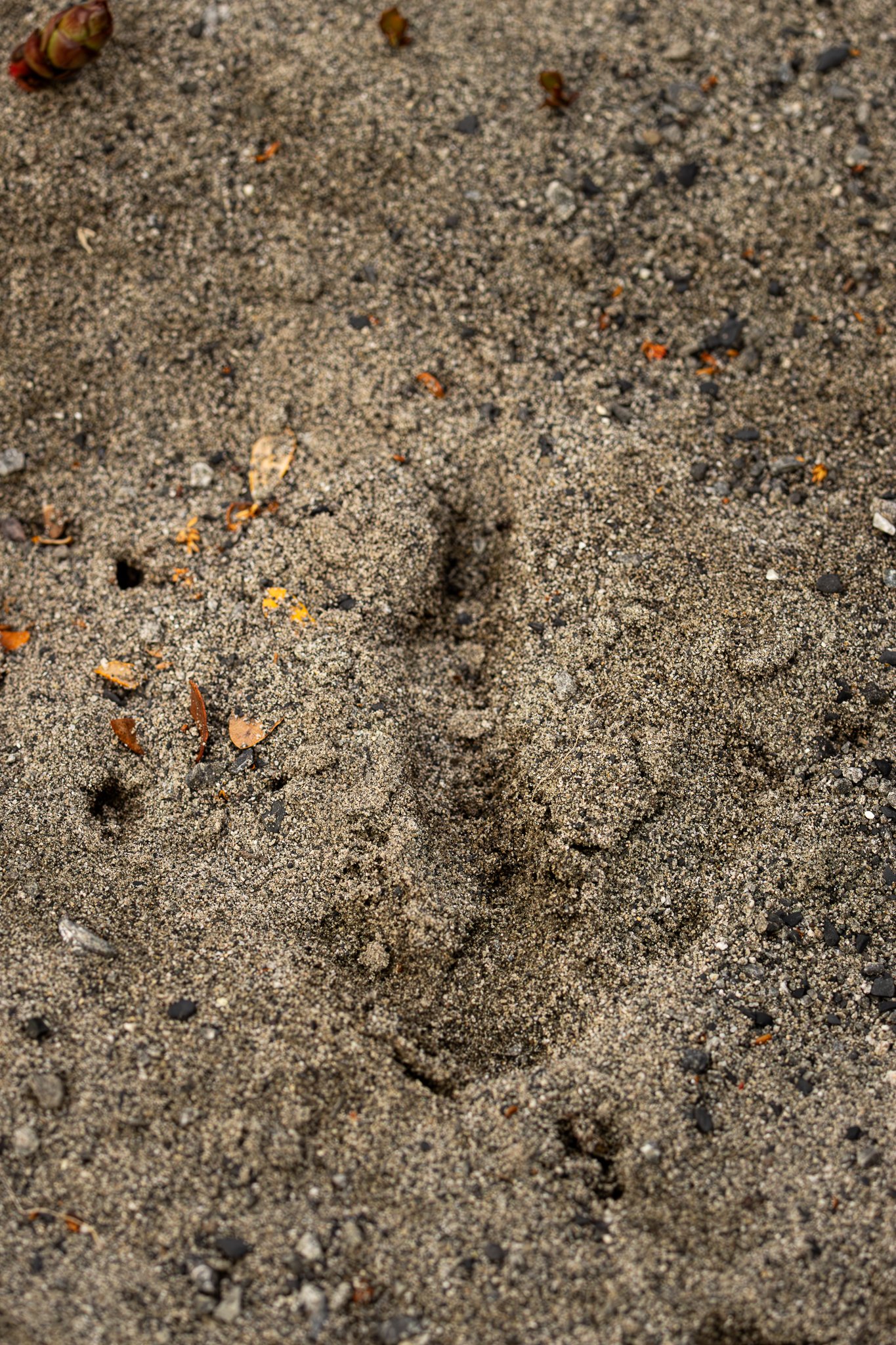
Roroa (Great Spotted Kiwi) tracks on the main Hawdon Valley track. [1/1250, f5.6, ISO1250]
Our main task of the day was to conduct a playback survey, playing recorded calls of the orange-fronted parakeet at pre-determined points along a transect line to attract birds and gather population data. This delicate work, permitted exclusively to DOC teams, is vital for assessing the status of these rare birds and guiding future conservation efforts. And this work certainly isn’t easy- trekking hundreds of metres up the steep valley walls away from the beaten path, and then travelling parallel to the valley floor along abrupt, unforgiving slopes.
Initial efforts drew in curious, yellow-crowned parakeets, whose calls and plumage can closely resemble their rarer relatives. We observed these birds engaging in fascinating nesting behaviours: males leading females from hollow to hollow in old growth mountain and red beech trees, inspecting each for suitable nesting sites. Others responded to our calls with territorial displays, their shrill notes reverberating through the valley.
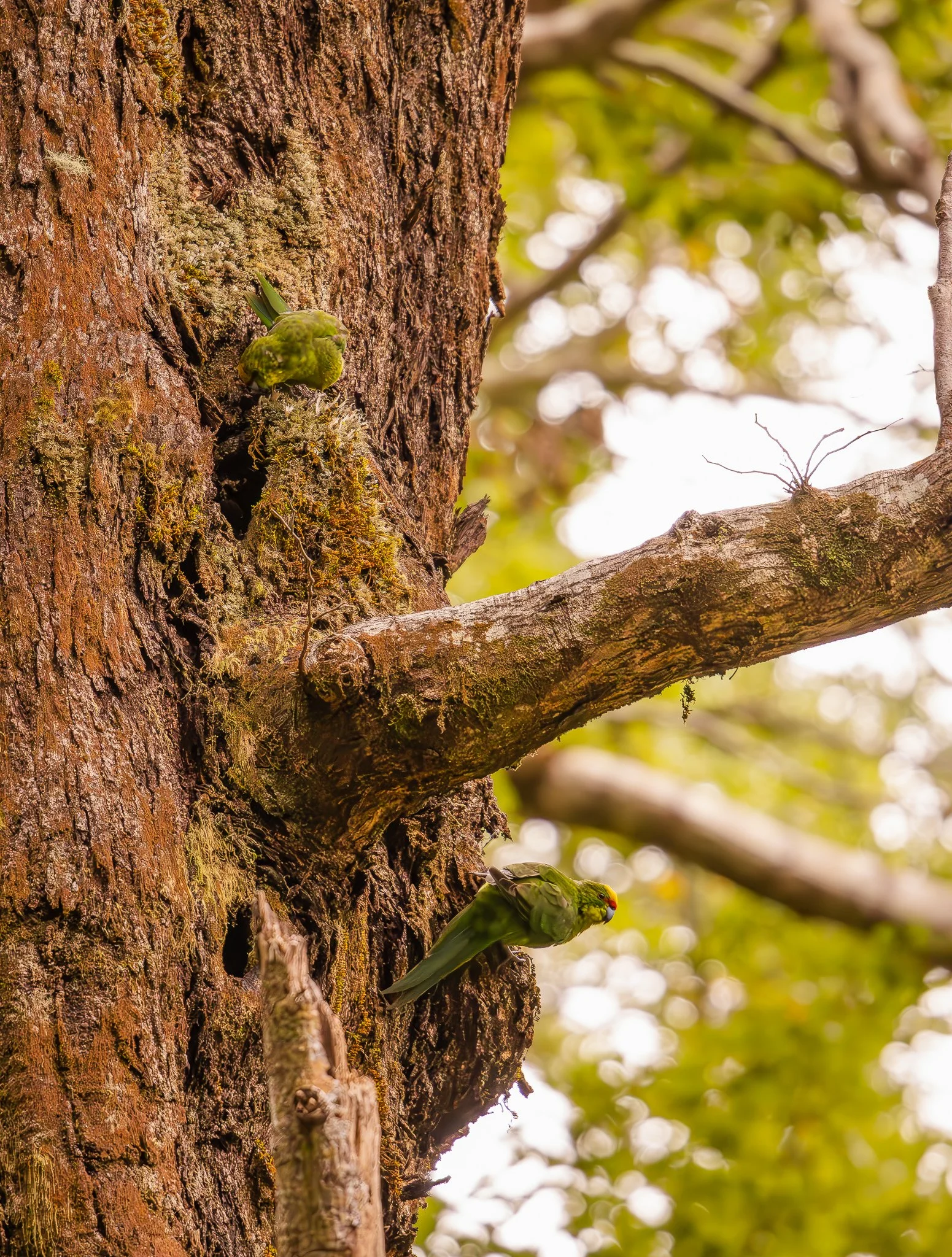
Female yellow-crowned parakeet (above) investigating a potential nesting hollow, guided by her male partner (below). [1/1250, f7.1, ISO6400]
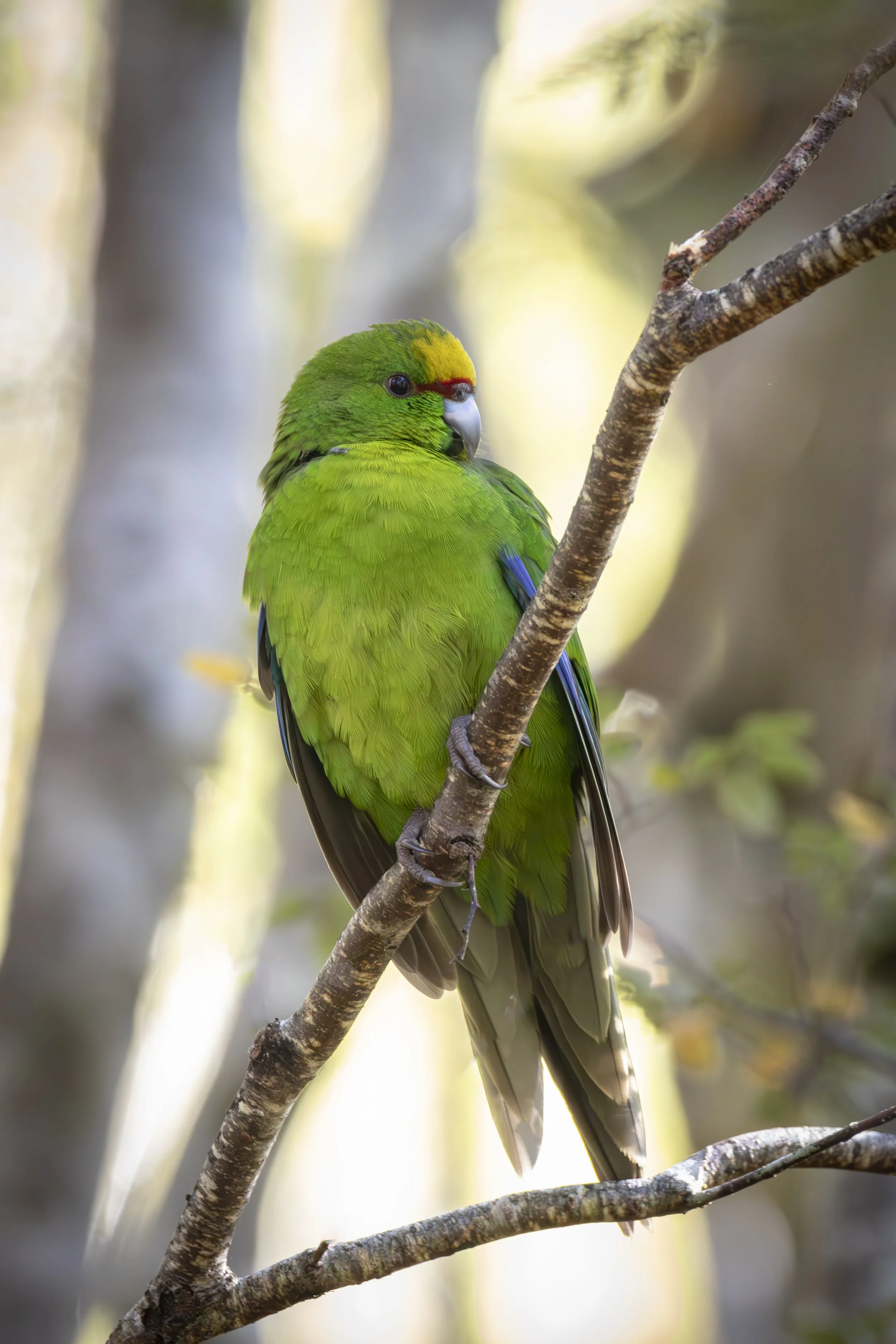
At last, our target species appeared. A female kākāriki karaka responded to the playback calls, flying in and perching just ten meters away—perfectly positioned at eye level as we stood further up the slope. She appeared slightly bedraggled, likely from the exhausting demands of nesting or mate searching. Yet, she lingered long enough for me to adjust my position and capture clear photographs through the foliage. This intimate sighting, deep in an off-track section of the valley, was certainly a highlight for me.
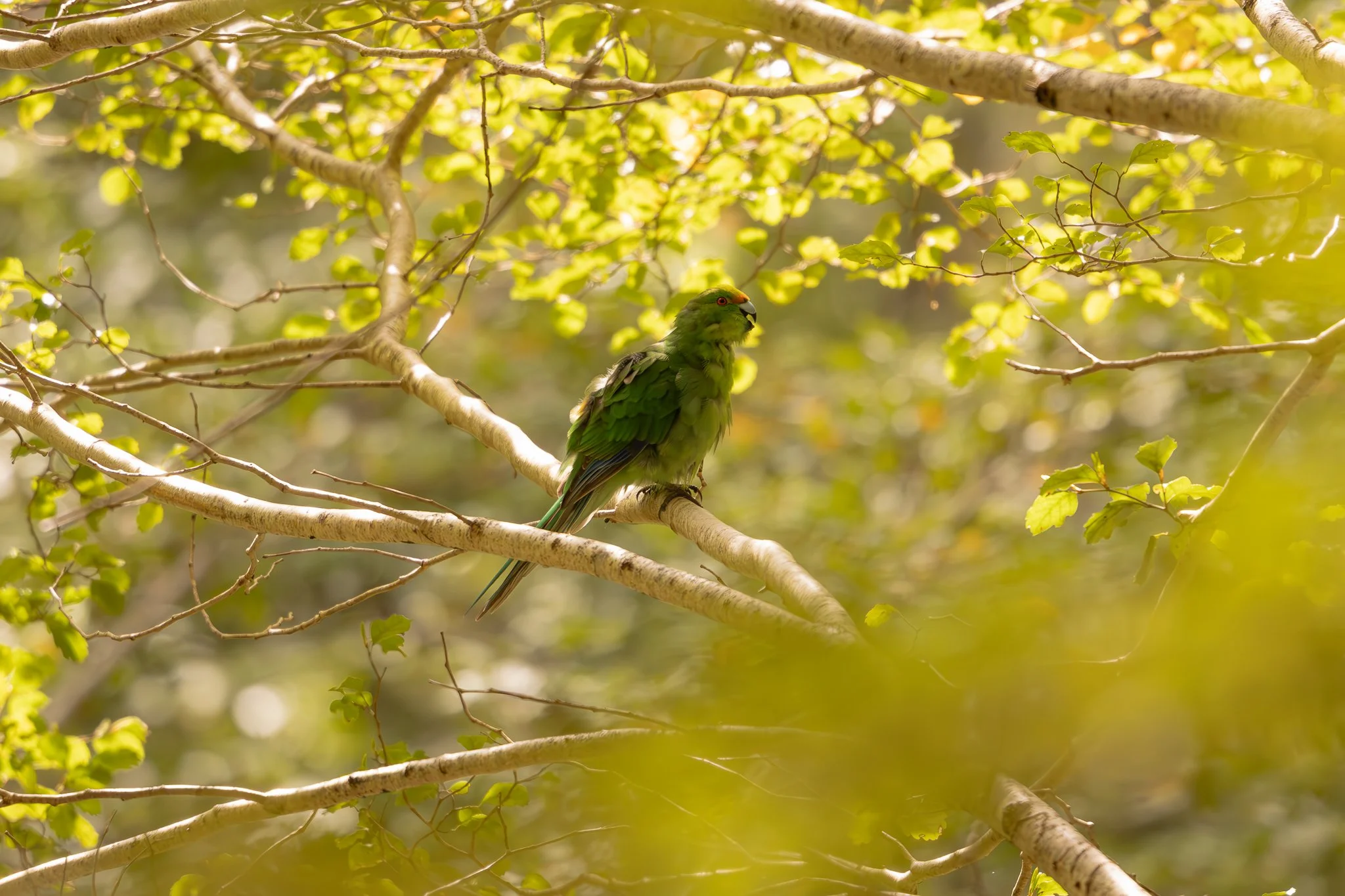
The female kākāriki karaka responding to our playback call. [1/1250, f/7.1, ISO2500]
Throughout the day, the valley continued to surprise and delight. A particularly inquisitive kākā paid us a visit, inspecting our presence with characteristic curiosity. These large bush parrots were once widespread throughout the national park, but today their populations are fragmented, making each sighting significant. However, increased predator control efforts give hope for a resurgence in their numbers. Throughout the trip, we saw and heard several kākā, reinforcing the importance of ongoing conservation.
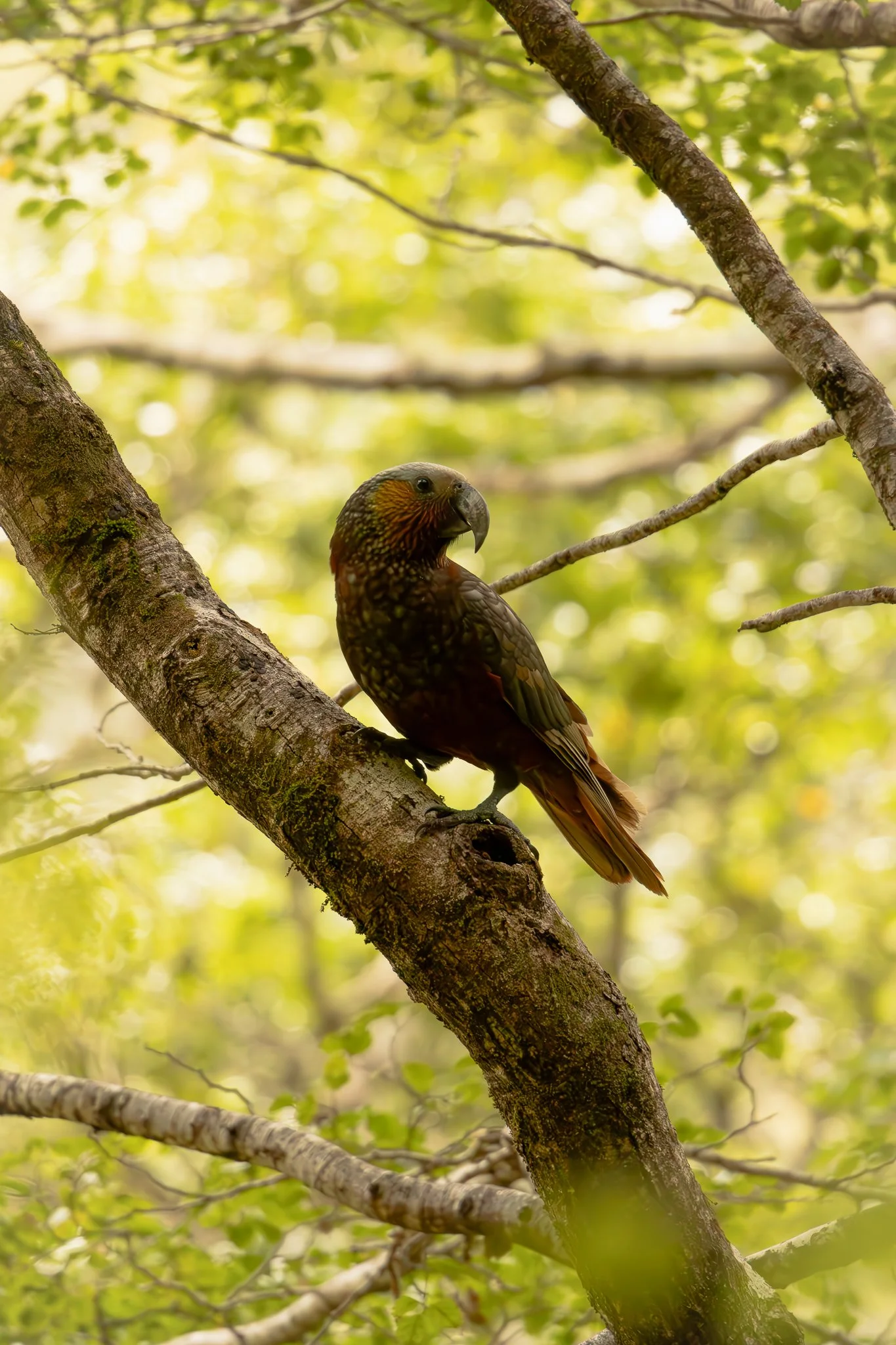
One very inquisitive kākā that decided to swoop in through the dense canopy at speed and land on a perch a mere 15 metres from us. Another amazing sighting from the trip! [1/1250, f/7.1, ISO6400]
Perhaps my most treasured encounter was with the mohua, a species whose conservation story is nothing short of remarkable. In 2007, just eight individuals were known to exist in Canterbury. Thanks to sustained trapping and translocation programs in 2014 and 2017, their population has now grown to an estimated 60–80 birds. Watching these radiant yellow birds, often travelling in multi-species flocks with pīpipi (brown creeper), was a deeply moving experience—one that photographers and birders alike dream of.
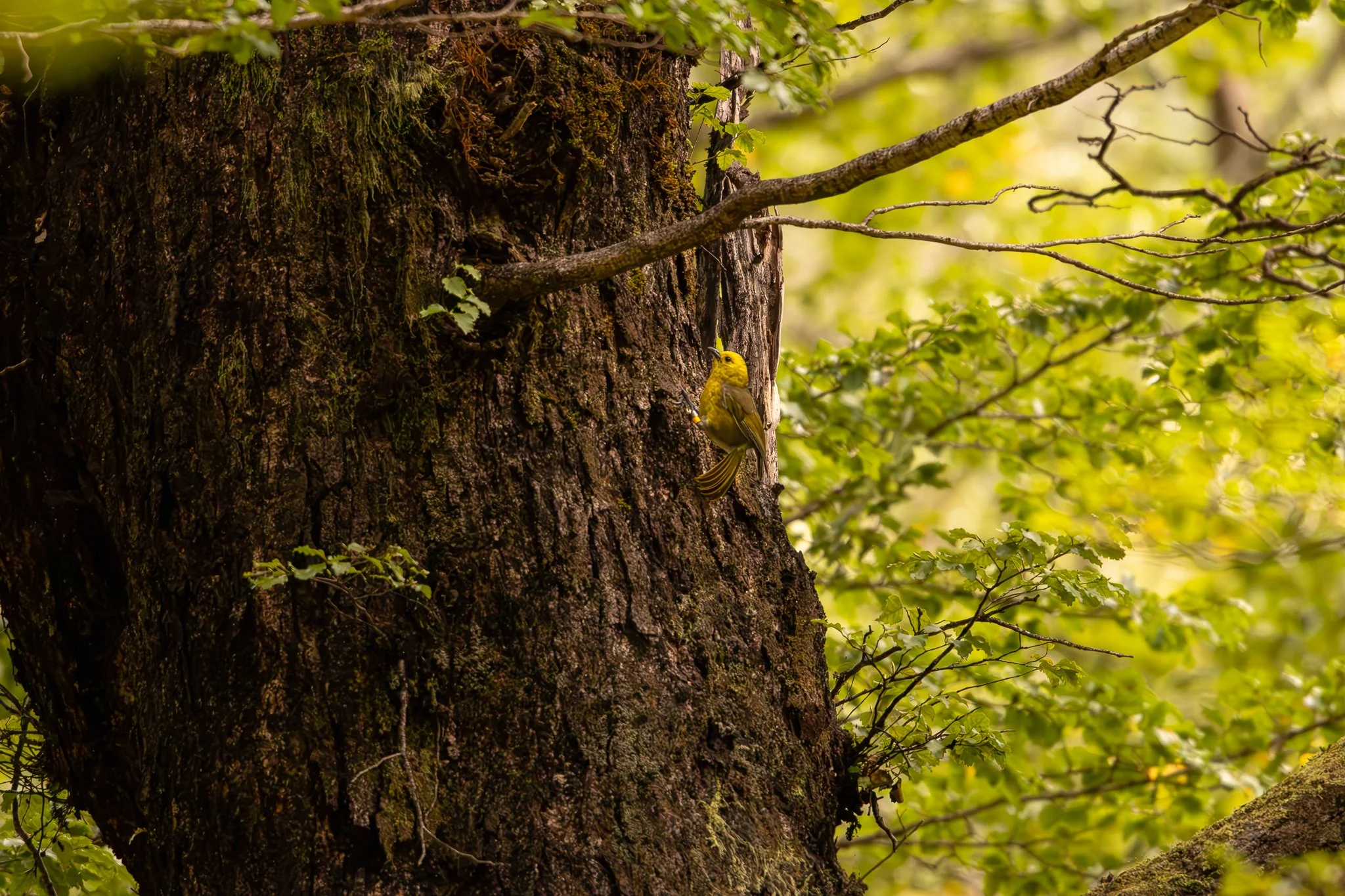
My very first image of the elusive mohua or yellowhead. I certainly won’t win any awards with this photo, but I was so happy to see one and I’ll certainly be back to improve on this shot! [1/1250, f/7.1, ISO6400]
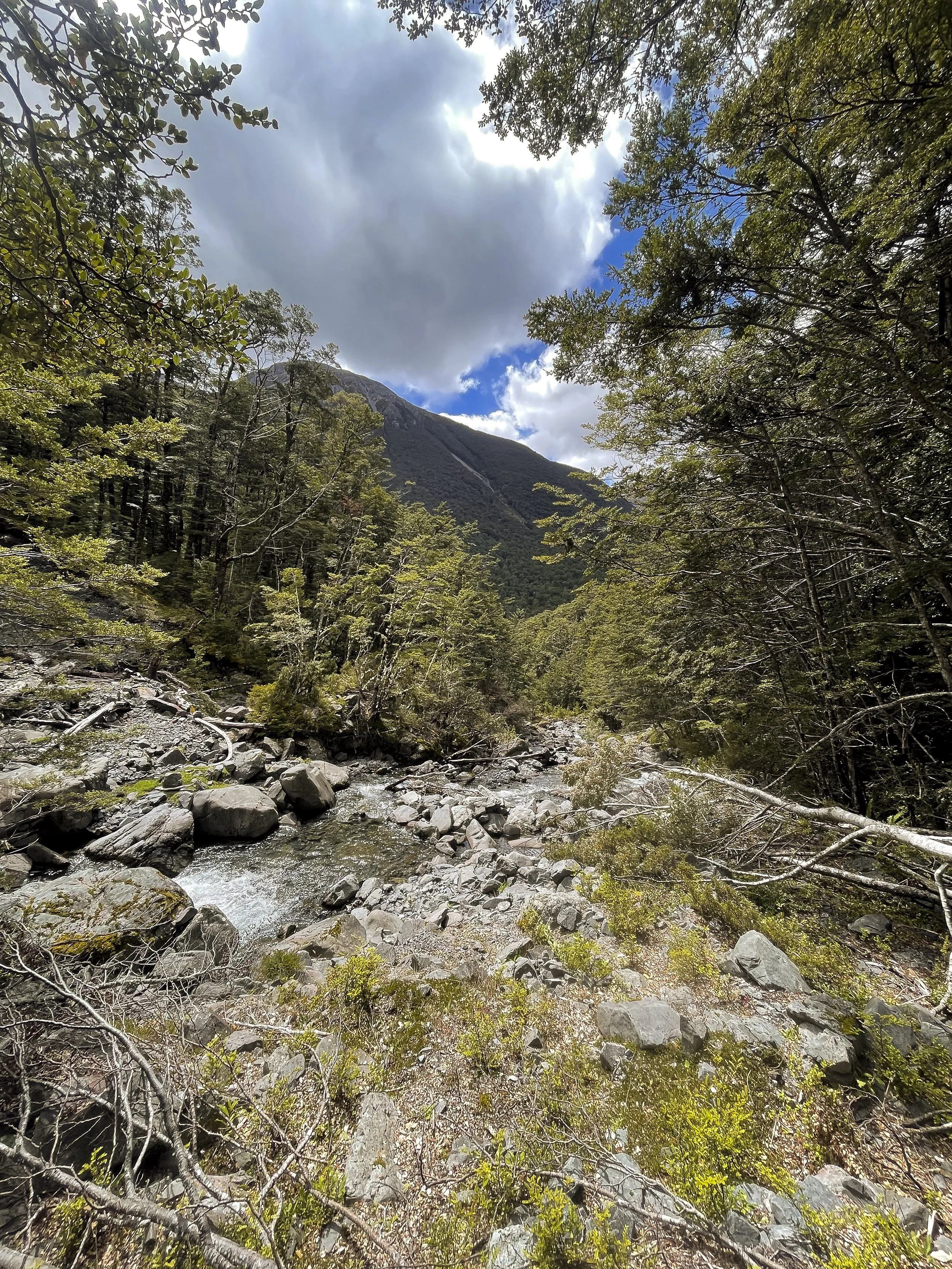
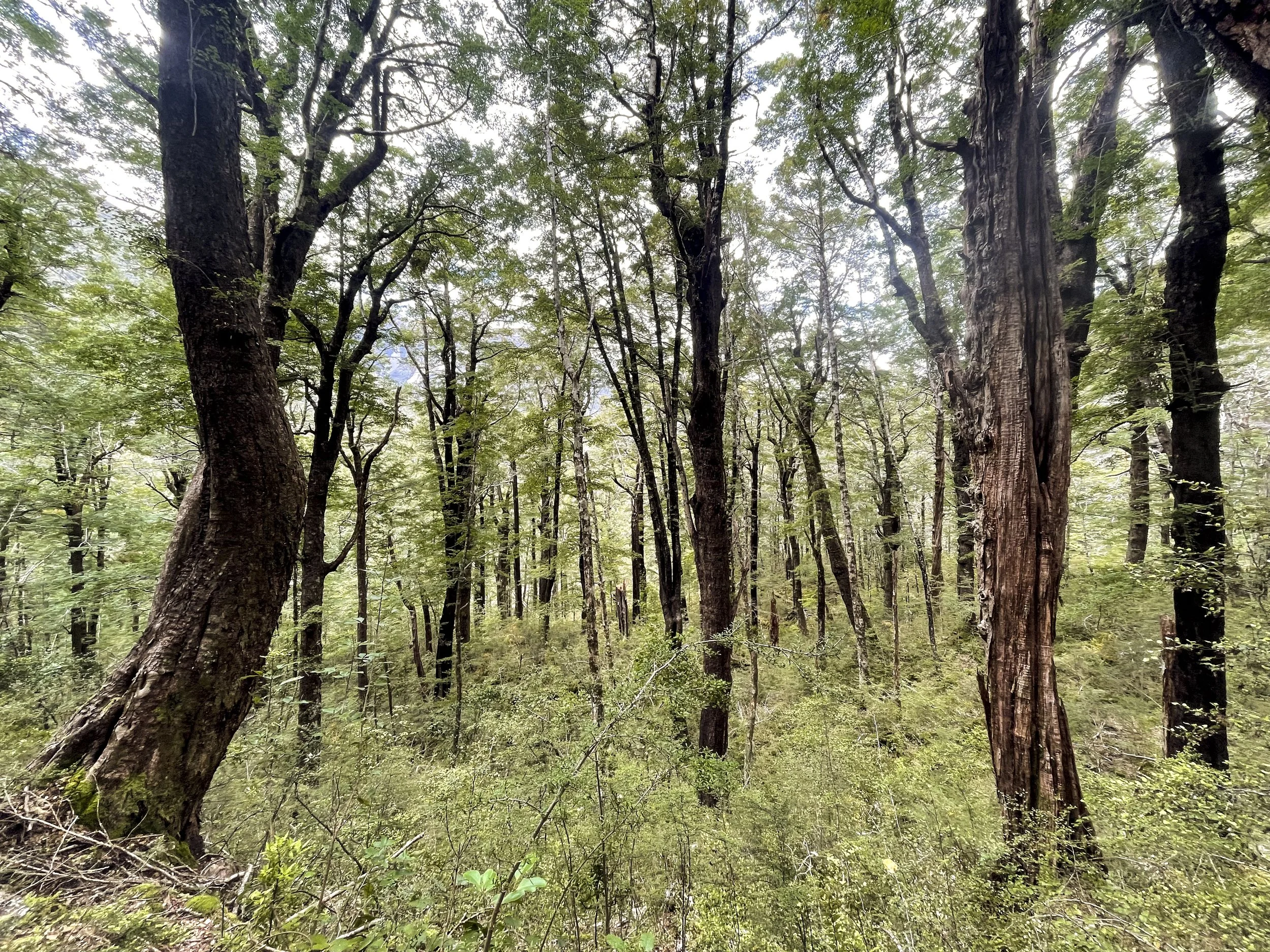
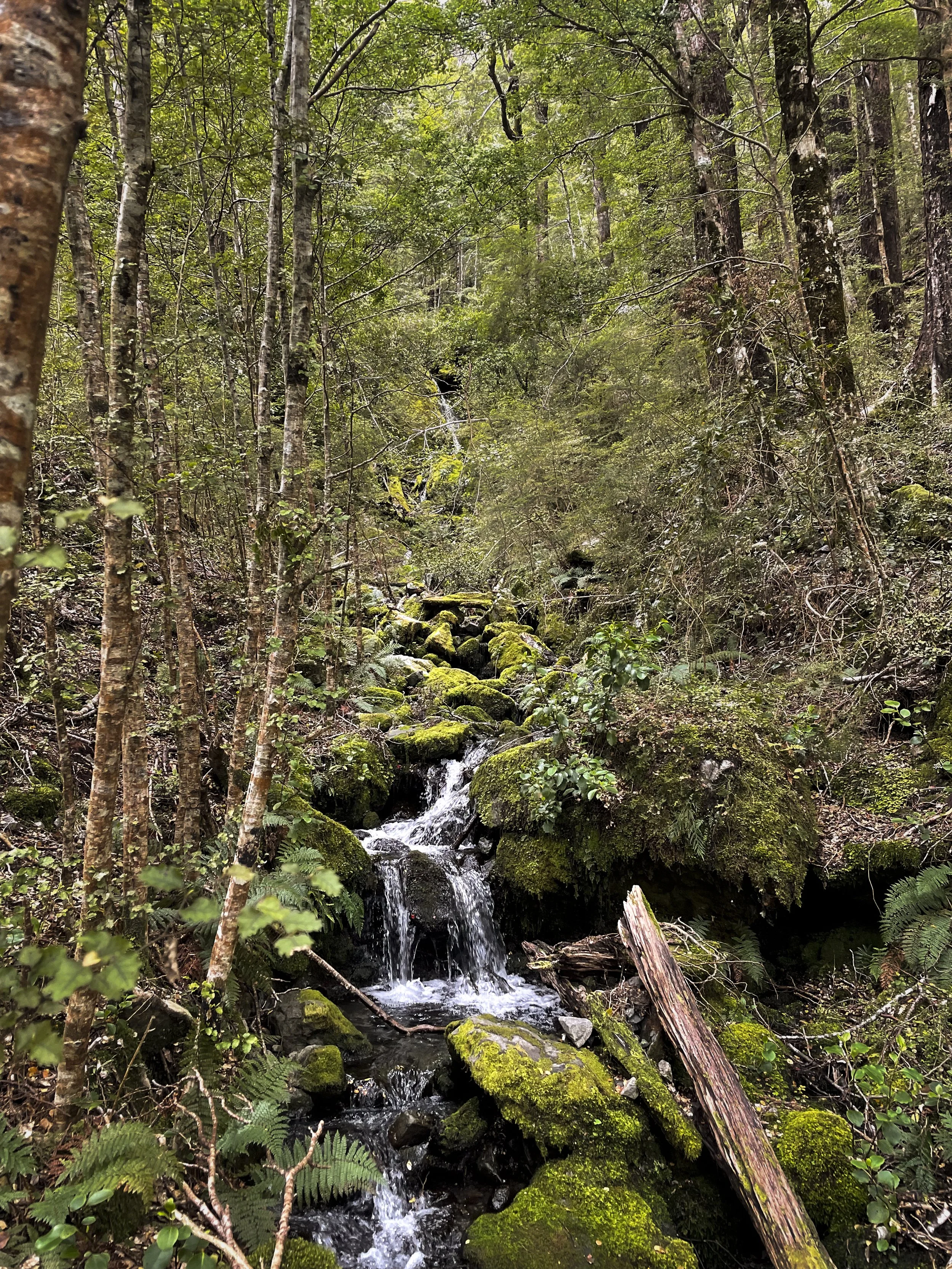
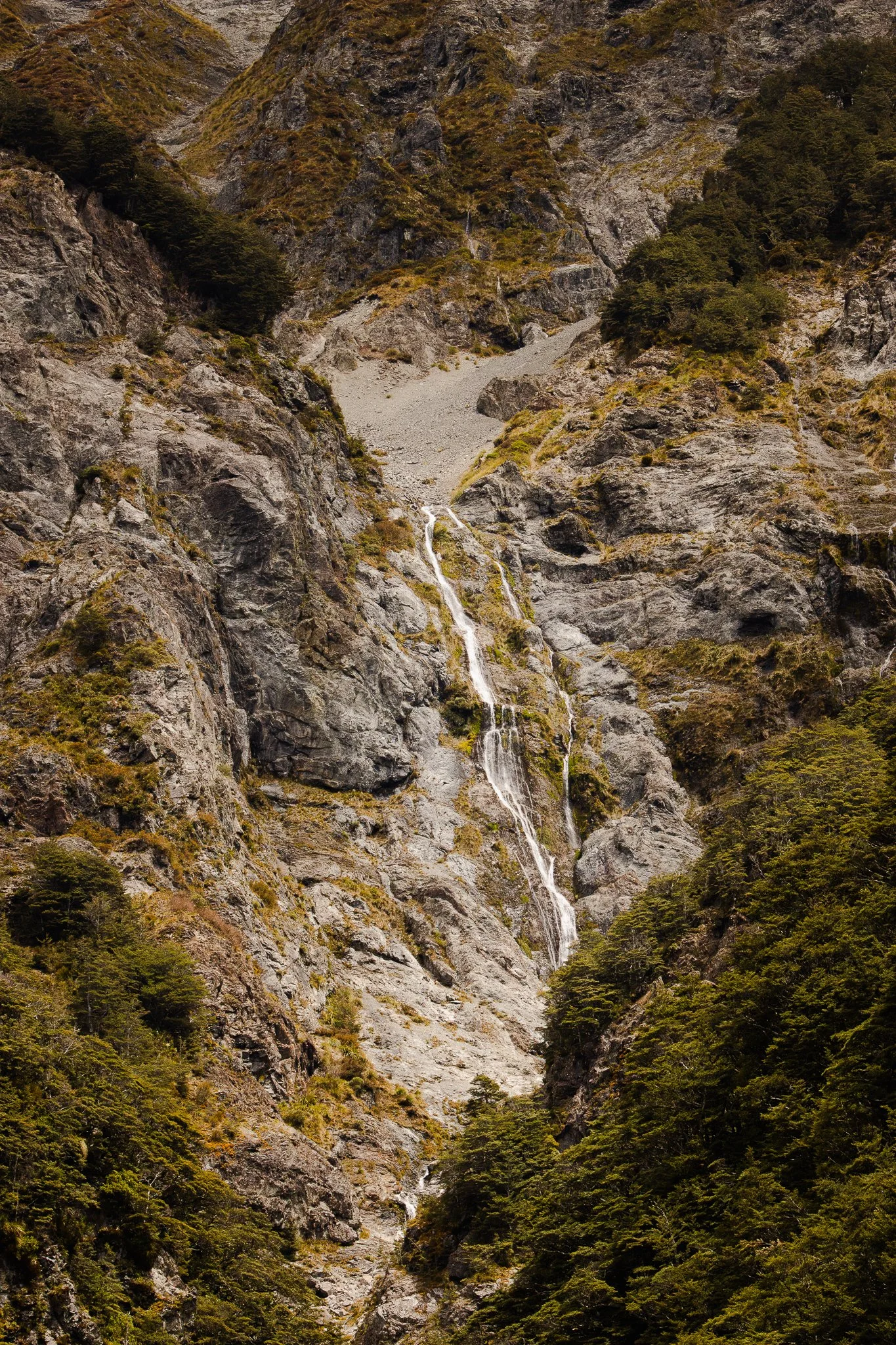
Beyond the wildlife, the landscape itself was breathtaking. Surveying days can involve hiking 16 kilometres, ascending 700+ metres of elevation, and navigating dense patches of bush lawyer, tangled deer tracks, and boulder-strewn gullies—all while carrying heavy camera equipment. Yet every moment of strain disappeared when we emerged into clearings bathed in light, crossed cascading waterfalls, or stood among towering beech forests draped in moss. This place certainly is left a mark on me.
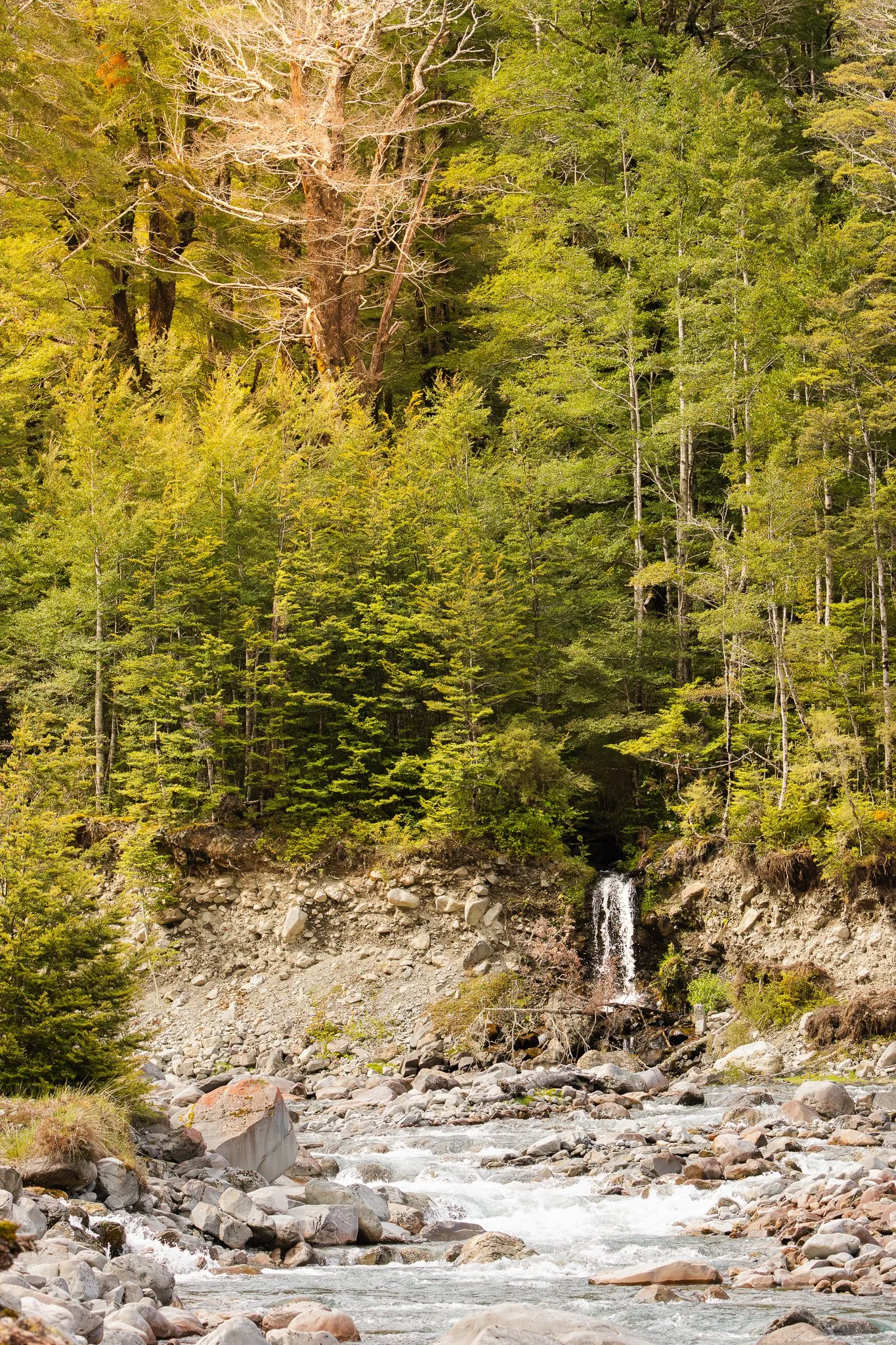
One of the many waterfalls that made all the hard work that much sweeter. [1/1600, f/7.1, ISO3200]
Later in the trip, our focus shifted to monitoring potential nesting sites—an essential activity for understanding population dynamics and refining predator control strategies. Locating an active nest requires patience and vigilance: observing a female parakeet enter a hollow and remain inside for at least two minutes, then watching for her return, which could occur anywhere from 30 minutes to four hours later. The DOC team’s persistence in this painstaking work is a testament to their dedication.
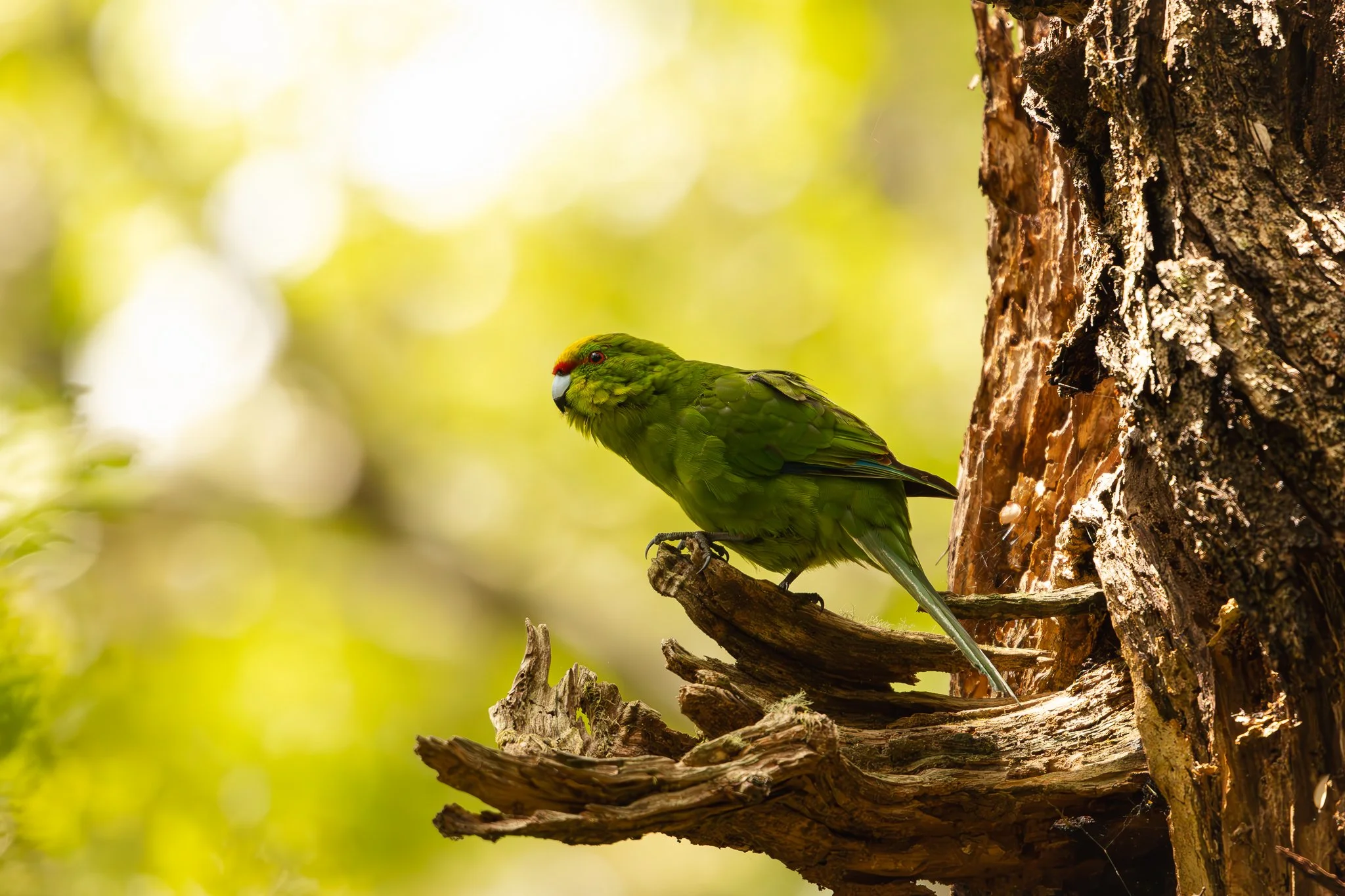
A particularly cooperative yellow-crowned parakeet that perched perfectly on the side of a mountain beech tree as its partner investigated a potential nest hollow higher in the canopy. [1/1000, f/7.1, ISO2500]
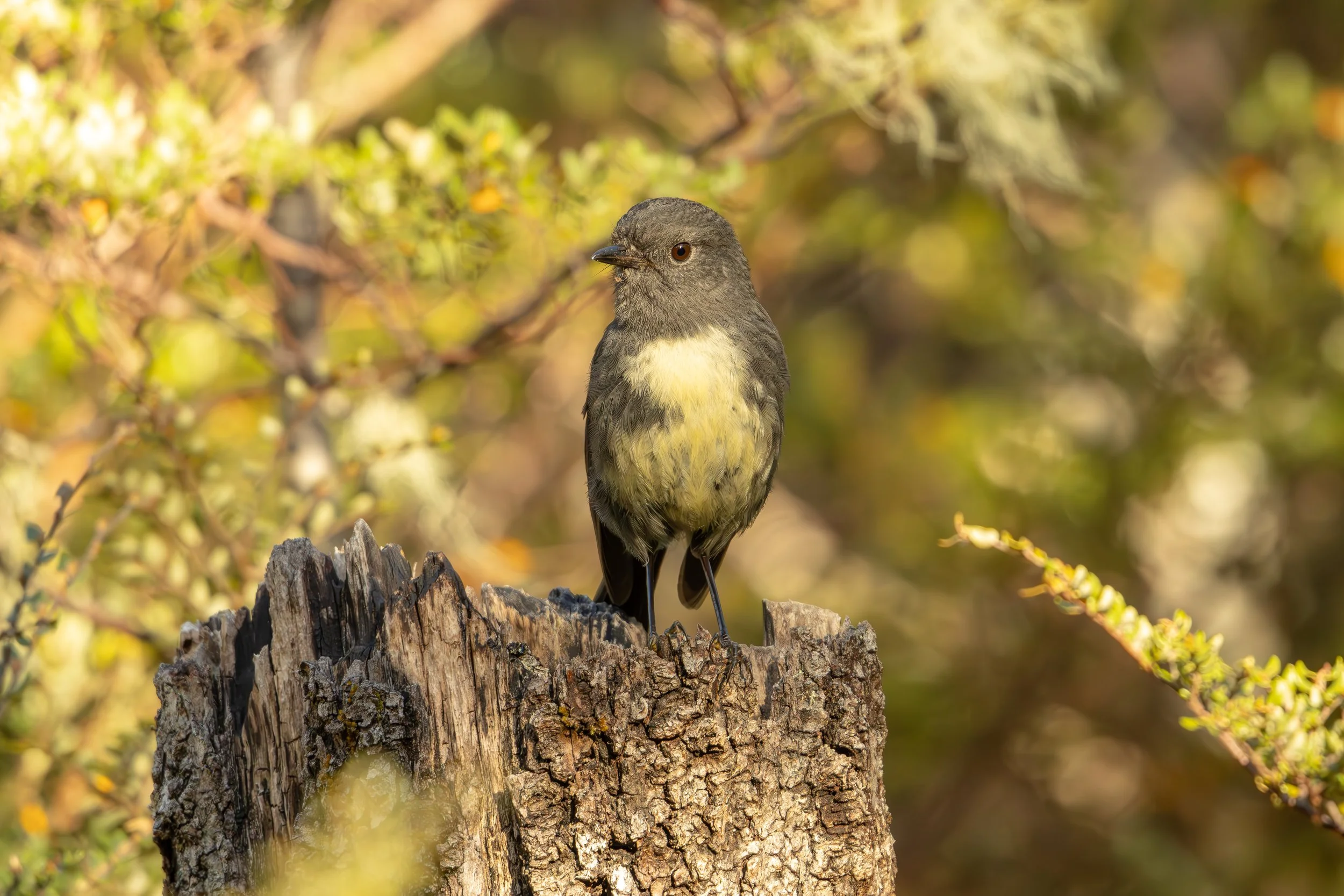
I had the privilege of joining the team at one of these sites. Lying quietly on the forest floor as to not disturb the parakeet’s natural behaviour, surrounded by the subtle rustlings and calls of the valley’s residents, I was struck by both the peacefulness and sheer amount of life. Overhead, tītitipounamu (rifleman) flitted through the canopy, while nearby toutouwai (South Island robins) sang territorial songs—seemingly unfazed by our presence. Though I had to depart to hike out of the valley before the female parakeet returned to the nest, the time spent immersed in this natural ecosystem was incredibly rewarding.
This expedition not only enriched my photographic portfolio, but deepened my understanding of the immense effort required to protect endangered species like the kākāriki karaka. My respect for the DOC staff and volunteers, who dedicate countless hours to this cause, has grown immensely.
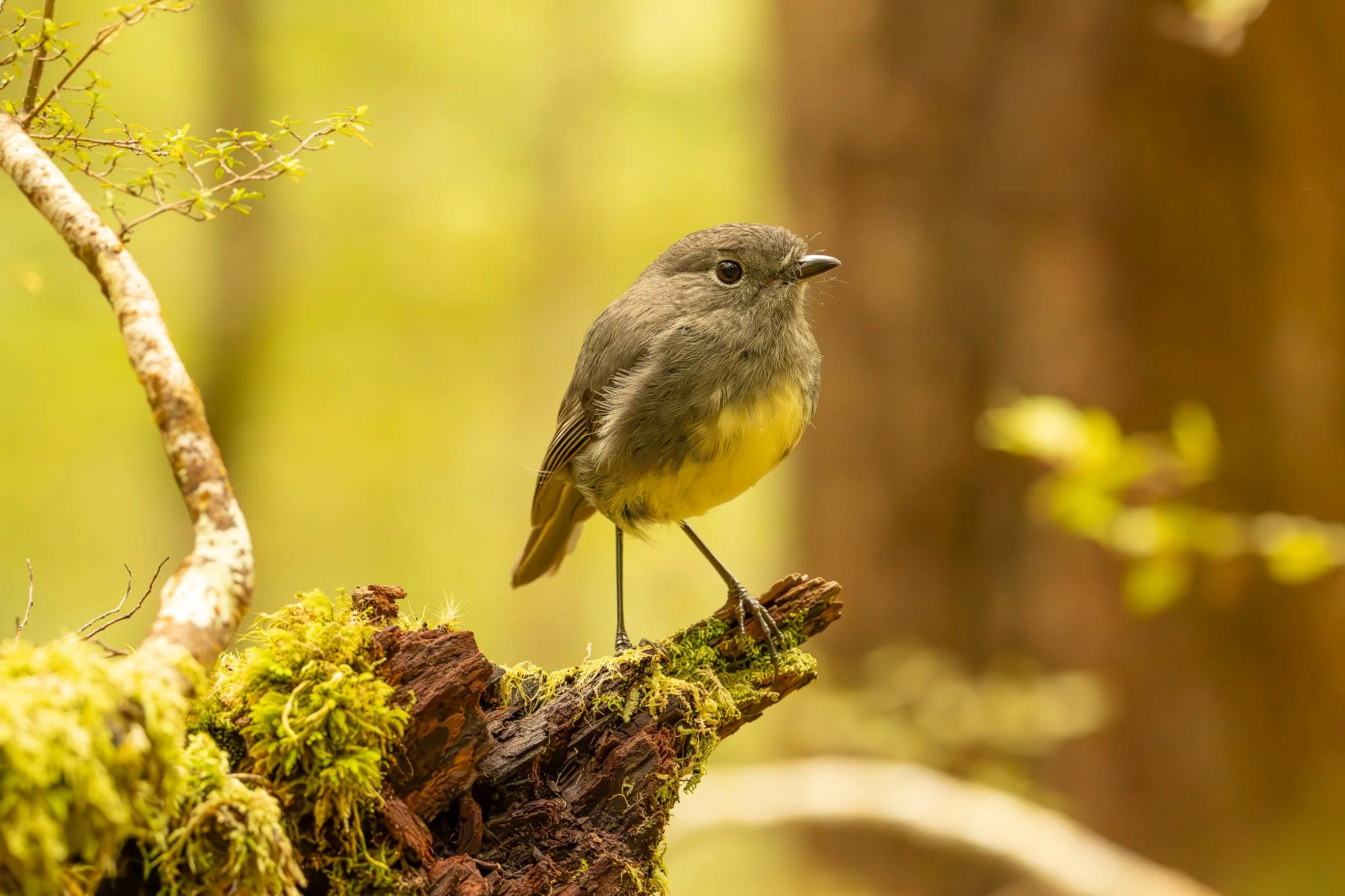
New Zealand robins are one of the species you see most often in the national park, often coming so close that they occasional land on your boot! [1/1250, f/5.6, ISO6400]
So, how are the kākāriki karaka faring today? Encouragingly, in early 2025, 34 birds were released onto predator-free Anchor Island to establish a new wild population. These individuals, raised at Orana Wildlife Park and the Isaac Conservation and Wildlife Trust, have adapted well to their new environment, and have even been seen flocking with mohua. Another 20 birds were released on the island in mid-April, contributing to a global population now estimated at 300–450 birds. Previous translocations to Blumine Island and Brook Waimārama Sanctuary have also proven successful, with breeding populations nearing carrying capacity. On the mainland, wild populations persist in two valleys within Arthur’s Pass National Park, bolstered by the release of 73 additional birds. Nevertheless, ongoing predator control and monitoring are essential to secure their future, and continued funding remains critical.
Reflecting on my time in Hawdon Valley, I feel incredibly fortunate. From watching ruru (morepork) hunt at dusk amongst the matagouri, to falling asleep to the calls of kiwi just metres from my tent, and waking to the dawn chorus of mohua, kākā and kākāriki karaka, the experience gave me a higher appreciation of this special national park.
I extend my heartfelt gratitude to the DOC Orange-fronted Parakeet team for their warm welcome and for generously sharing their knowledge and expertise. The skills I acquired and the encounters I witnessed have not only advanced my photographic journey, but strengthened my commitment to supporting the conservation of Aotearoa’s unique and threatened wildlife. The Hawdon Valley remains, in my eyes, one of New Zealand’s true sanctuaries—both for rare species and for those of us fortunate enough to witness their resilience.
If you want to learn more about the work the Department of Conservation does, the Hawdon Valley, or other topics dicussed in this blog, check out some of the links below.
Department of Conservation- Kākāriki Karaka
RNZ article about the release of orange-fronted parakeets into Arthur’s Pass National Park
Isaac Conservation and Wildlife Trust Orange-Fronted Parakeet
Orana Wildlife Park- Breed for Release
Analysis and Review of National Kea and Kākā databases
Mohua Return After 20-Year Absence- Department of Conservation