Lost Amongst Southern Forests, Penguins and Sea Lions: My Rakiura Adventure
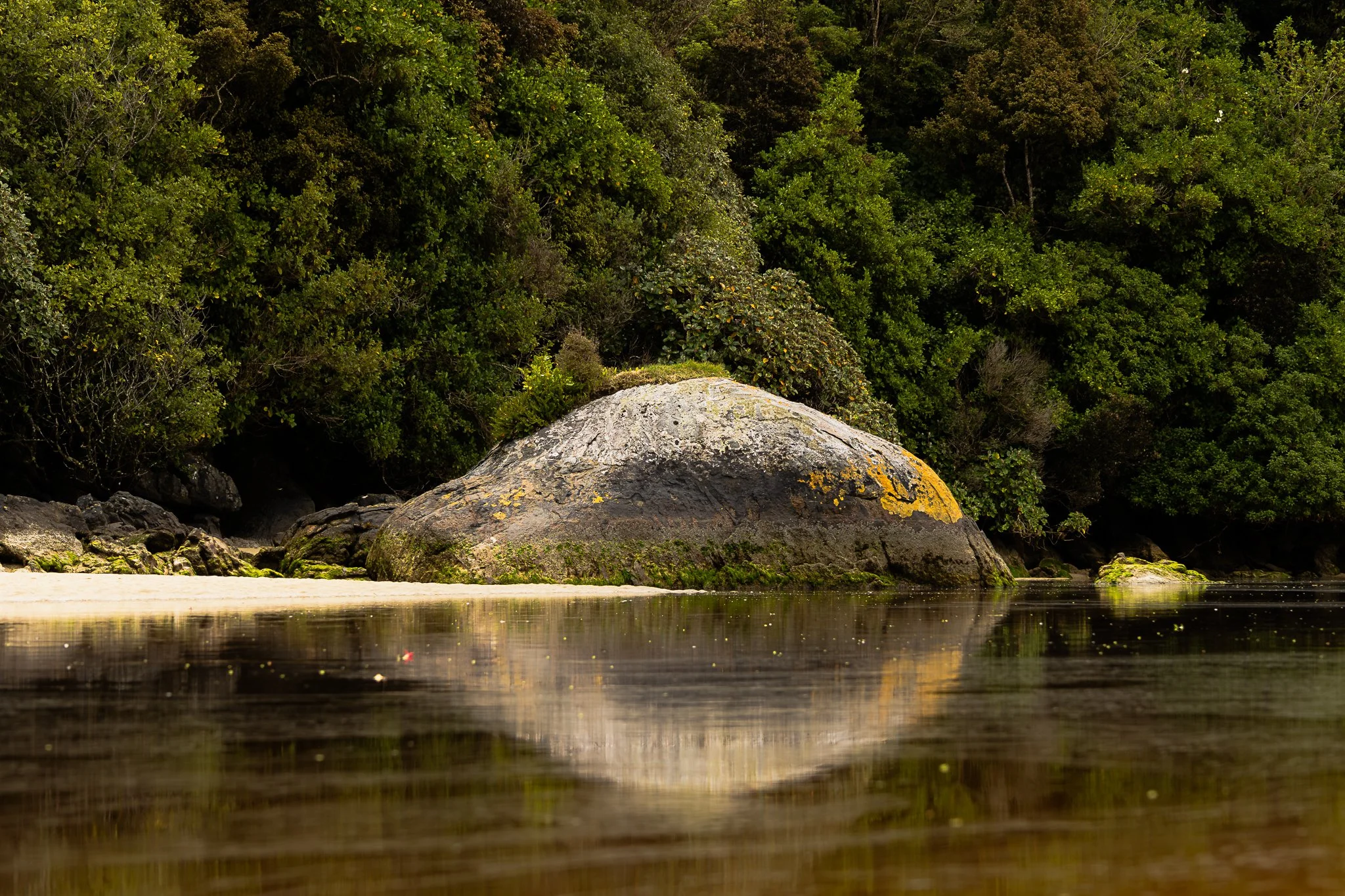
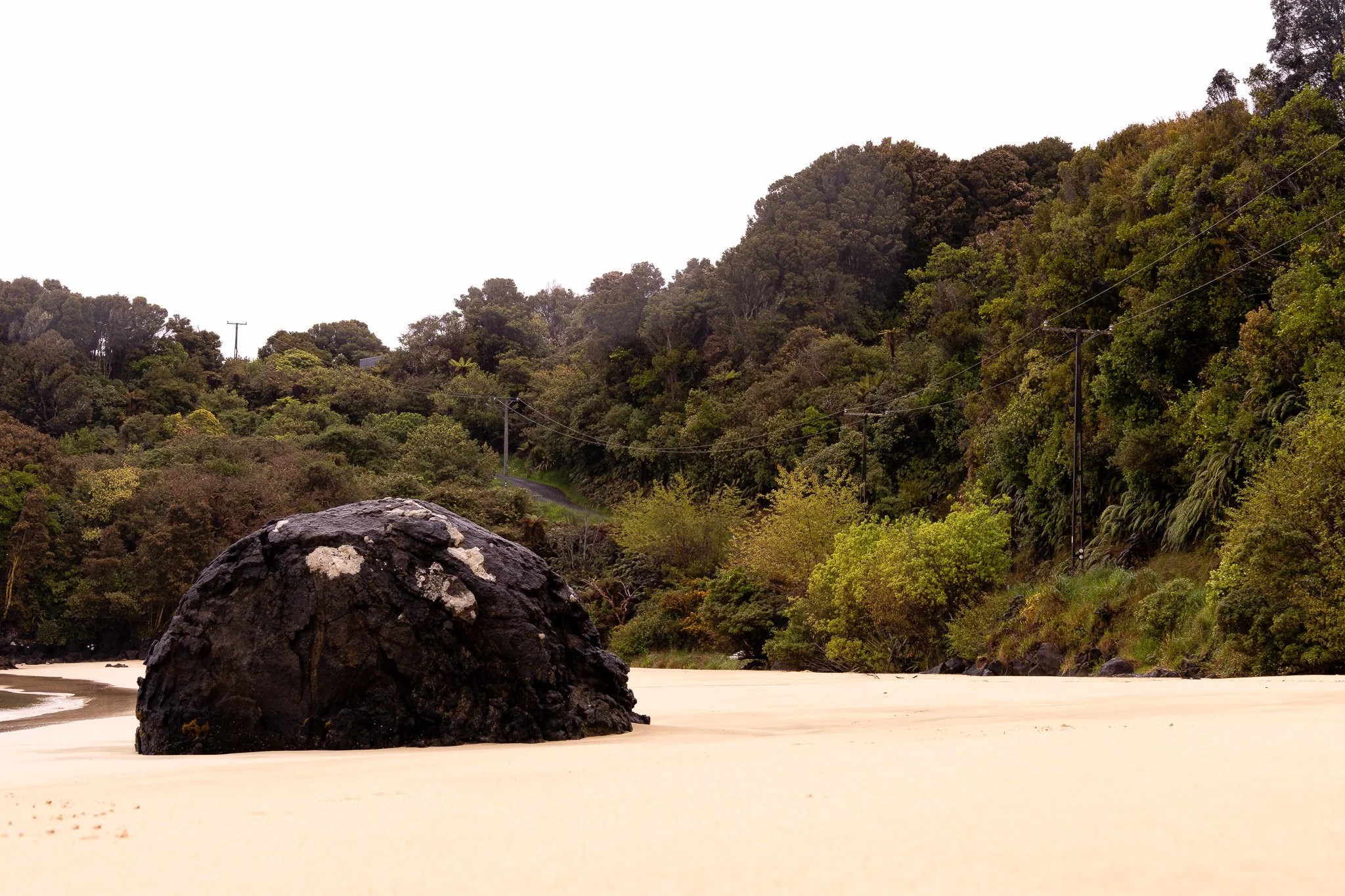
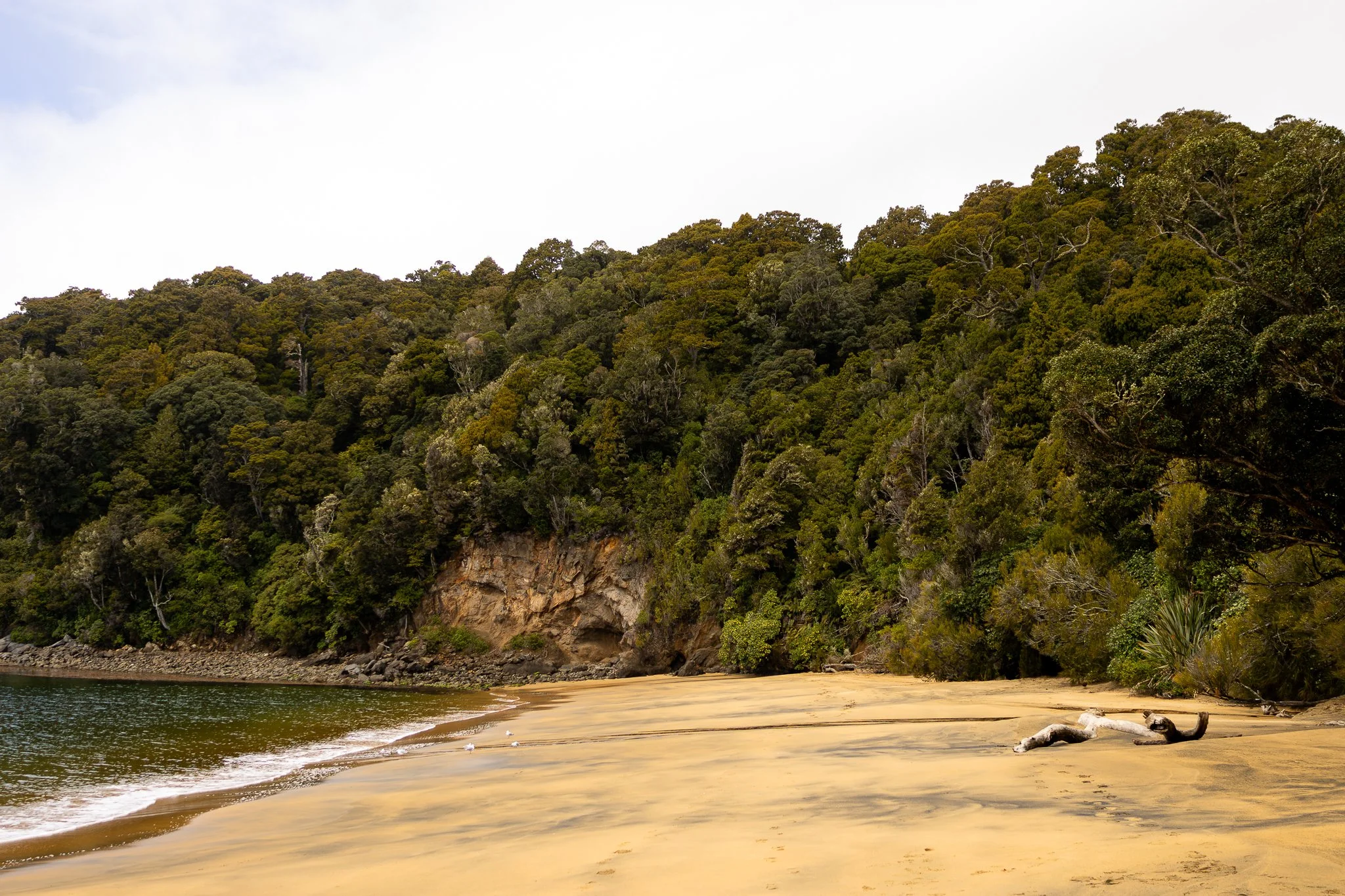
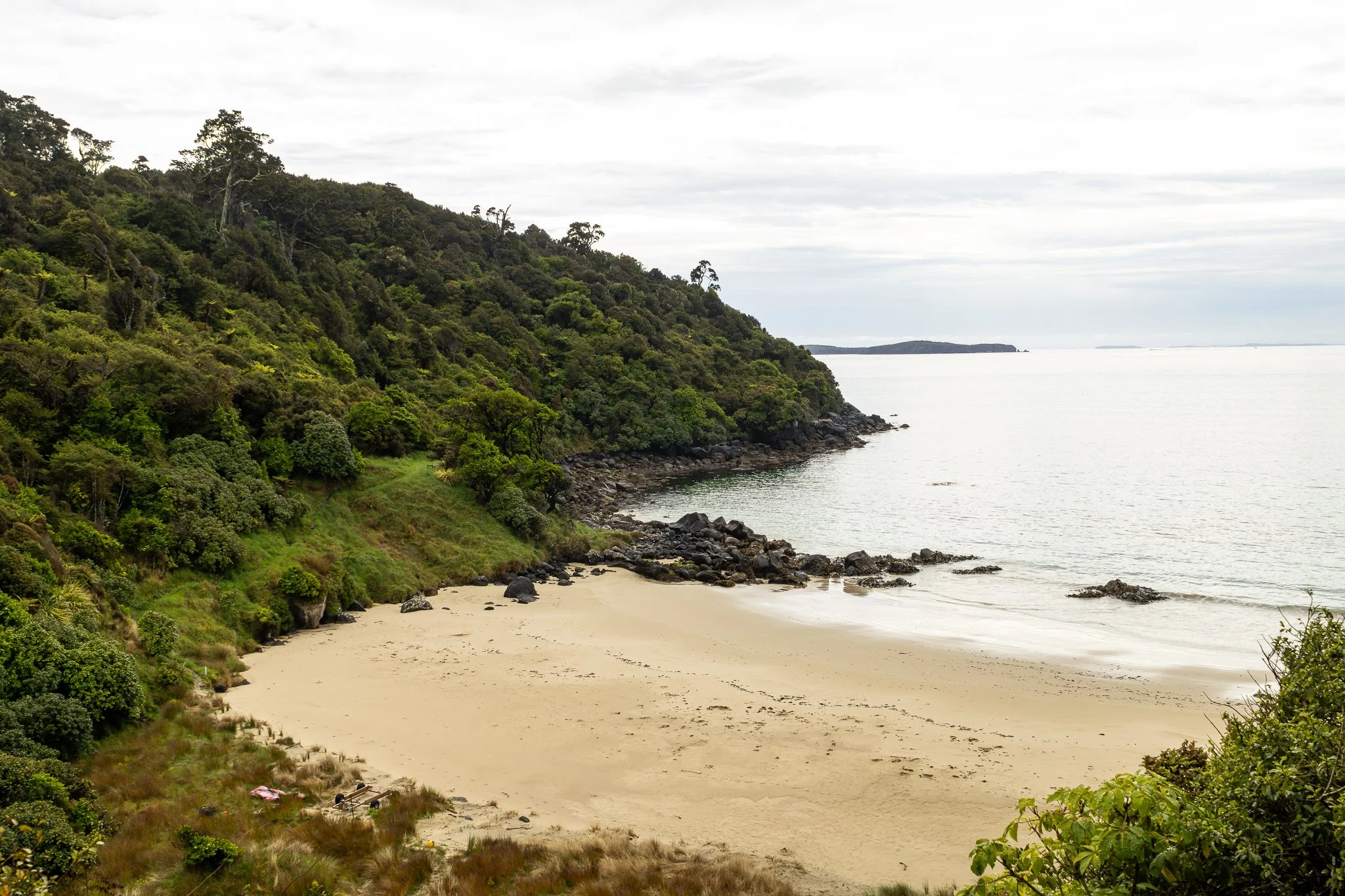
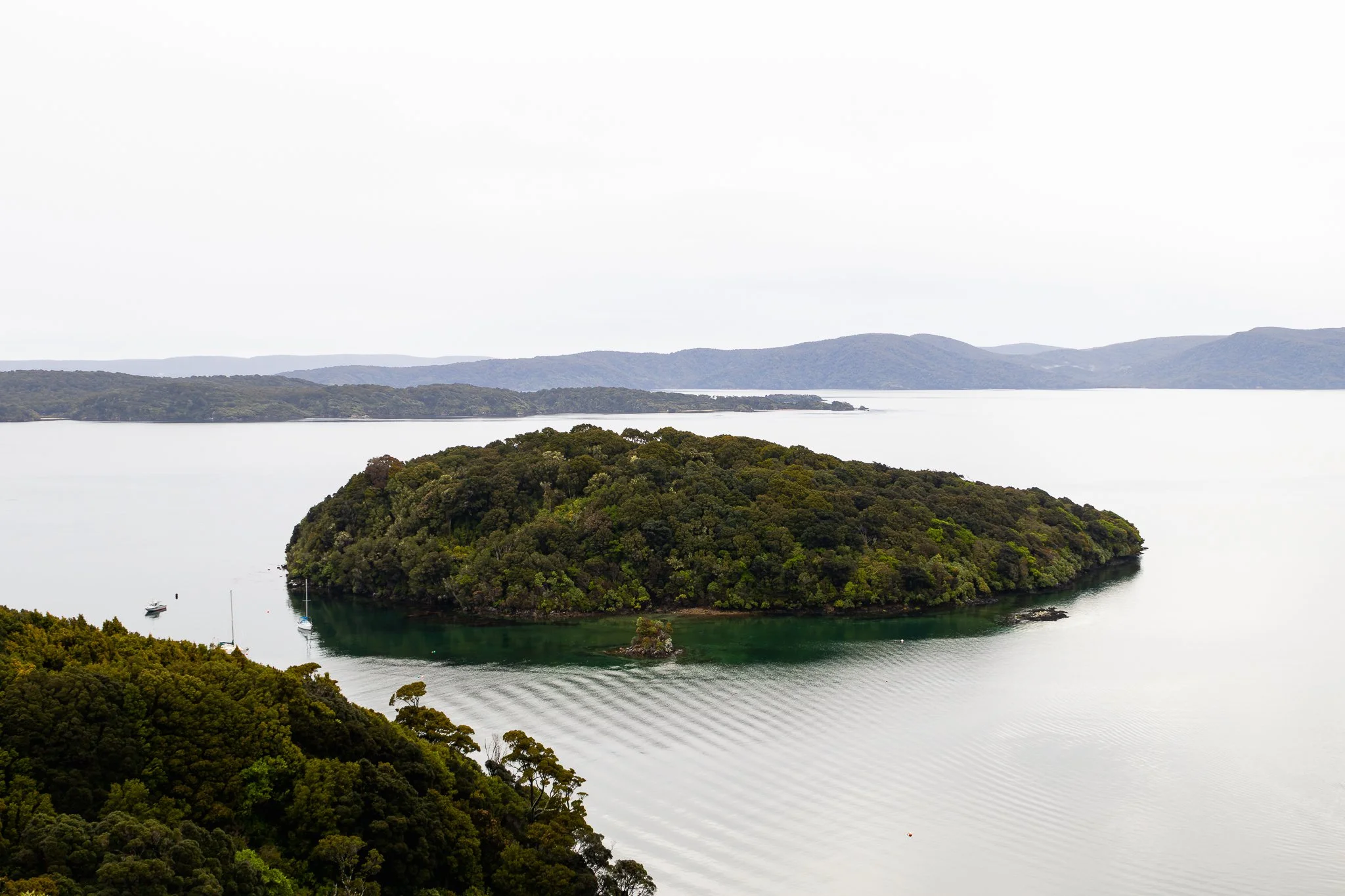
One of the many stunning corners of Rakiura I came across [1/60, f/9.0, ISO 100].
Rakiura has been at the very top of my list of places to visit in Aotearoa for as long as I can remember. There has always been something that has drawn me towards this incredible island. Perhaps the rugged landscapes, the feeling of remoteness, and the opportunity to experience some of New Zealand’s most unique biodiversity. In November last year, I finally made that dream trip come true.
Getting there from Christchurch was an adventure in itself. My journey started with a 6am flight to Invercargill, followed by a bus to Bluff at 8:30am, and then the ferry across to Rakiura at 10am. With only four days on the island, I wanted to make every moment count, and with only one available spot on a pelagic boat trip at midday on the day of my arrival, there was no time to waste. Fortunately, the Foveaux Strait crossing was surprisingly smooth, which is not usually the case. I did have to make a quick run to the wharf to make the boat on time, but thankfully I made it. And what a way to start the trip!
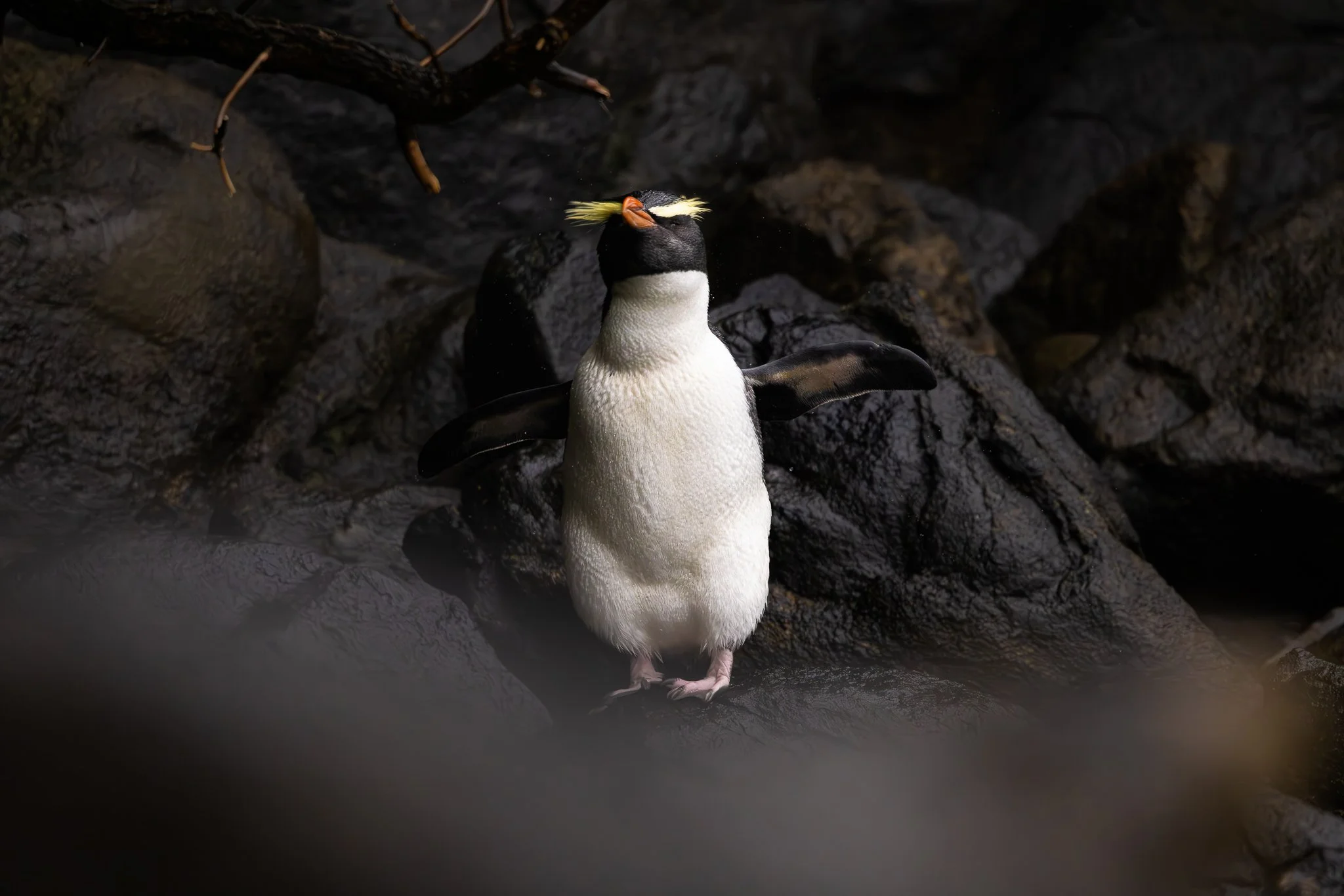
One of the species I was most hoping to see on this boat trip was a tawaki (Fiordland crested penguin). I have previously had the privilege of working closely with these incredible birds at the South Island Wildlife Hospital (read my blog about this phenomenal facility here), but seeing them in the wild, in the environment where they belong, was a major goal of mine. I couldn’t believe how quickly into my trip that dream became a reality.
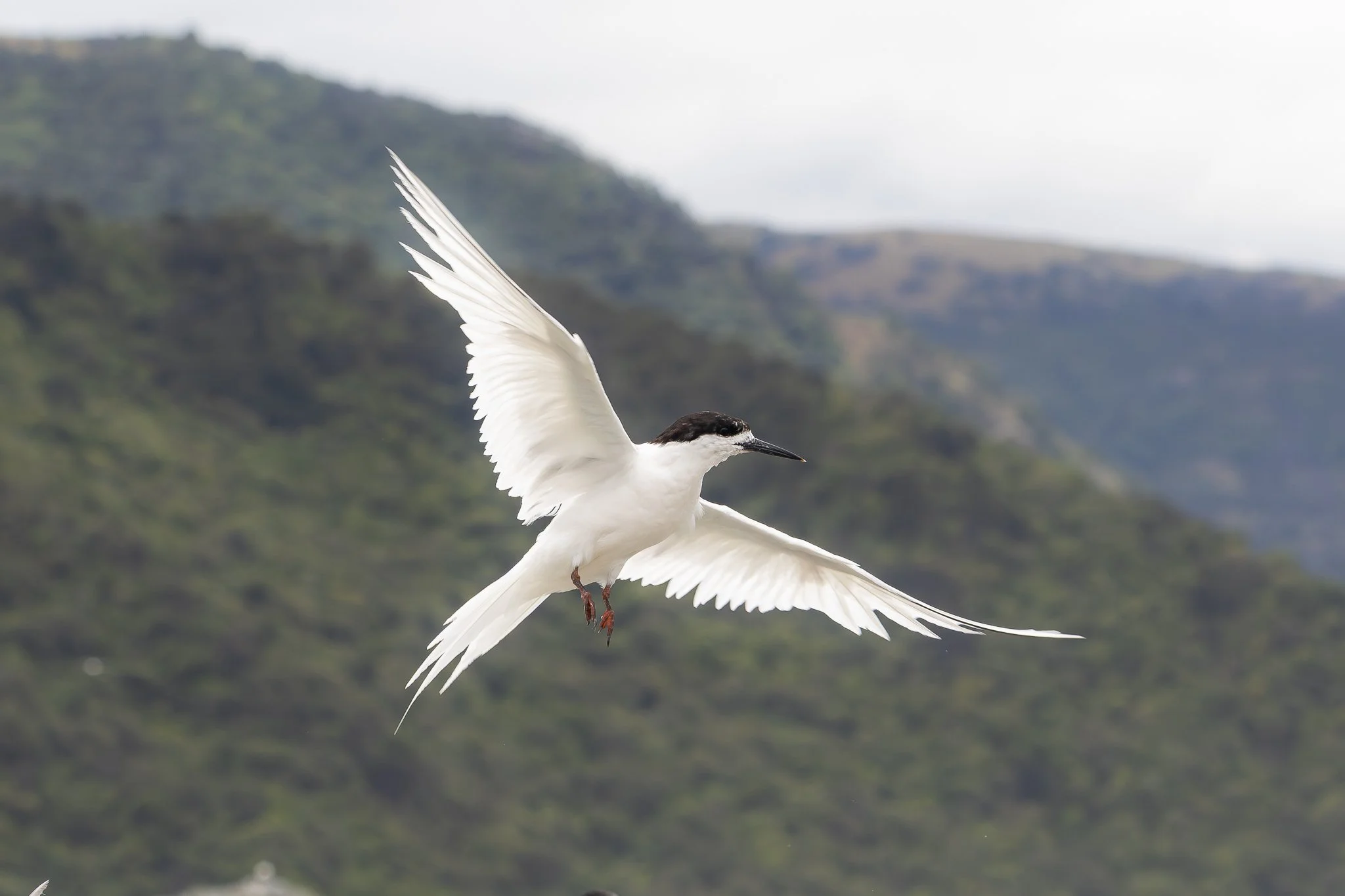
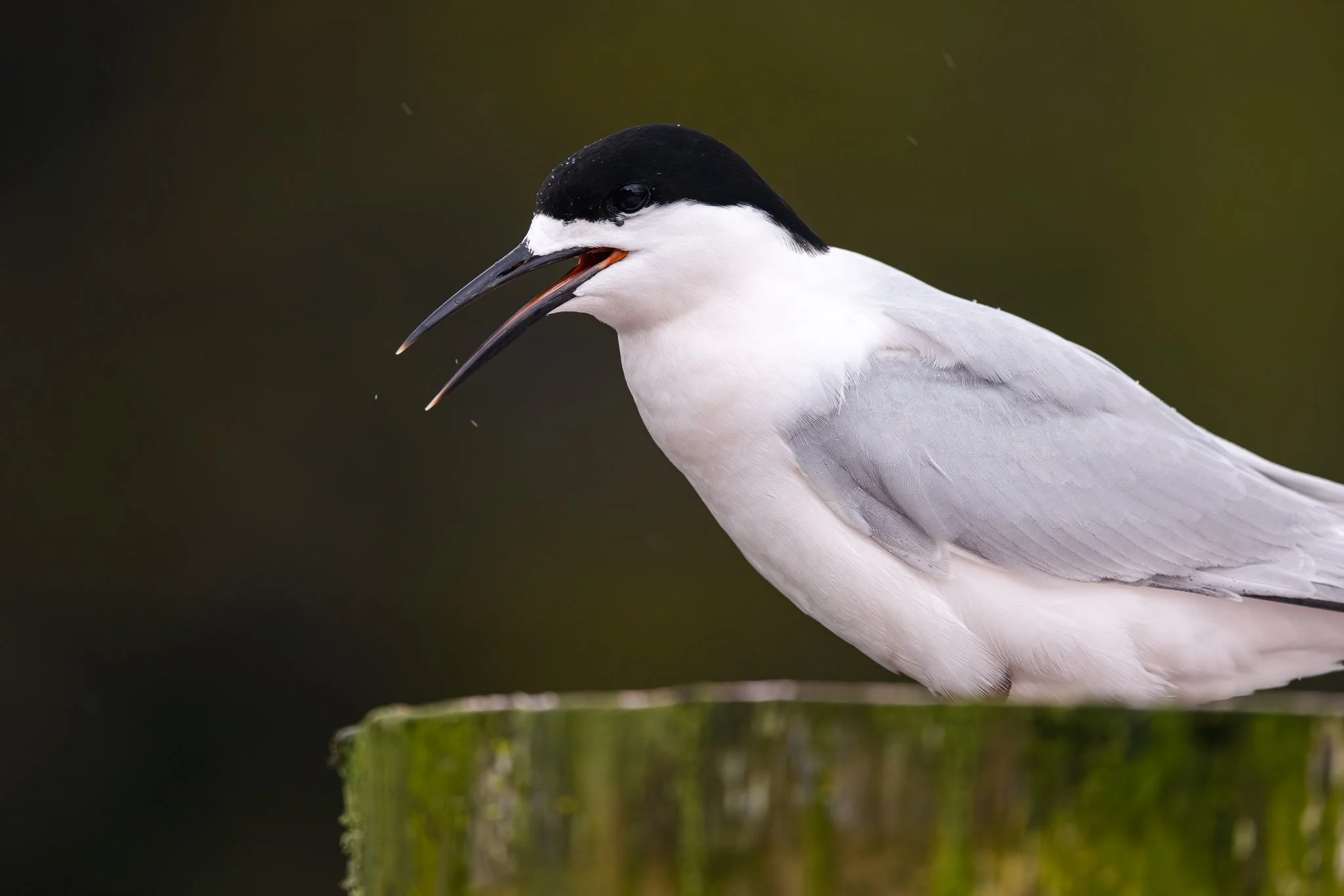
Only around five minutes into my trip with Rakiura Charters, our amazing guide Matt shared one of the best ways to spot tawaki: look for diving tara (white-fronted terns). These birds are often a sign that baitfish are being herded towards the surface by a predator that could potentially be one of these penguins!
Almost immediately, we came across a group of tara, and sure enough, a pair of tawaki were feeding beneath them. They surfaced briefly within 20 metres of the boat, giving me just enough time to capture a few images before disappearing again. Little did I know at the time, this would only be the first of many incredible encounters with these birds throughout the trip.
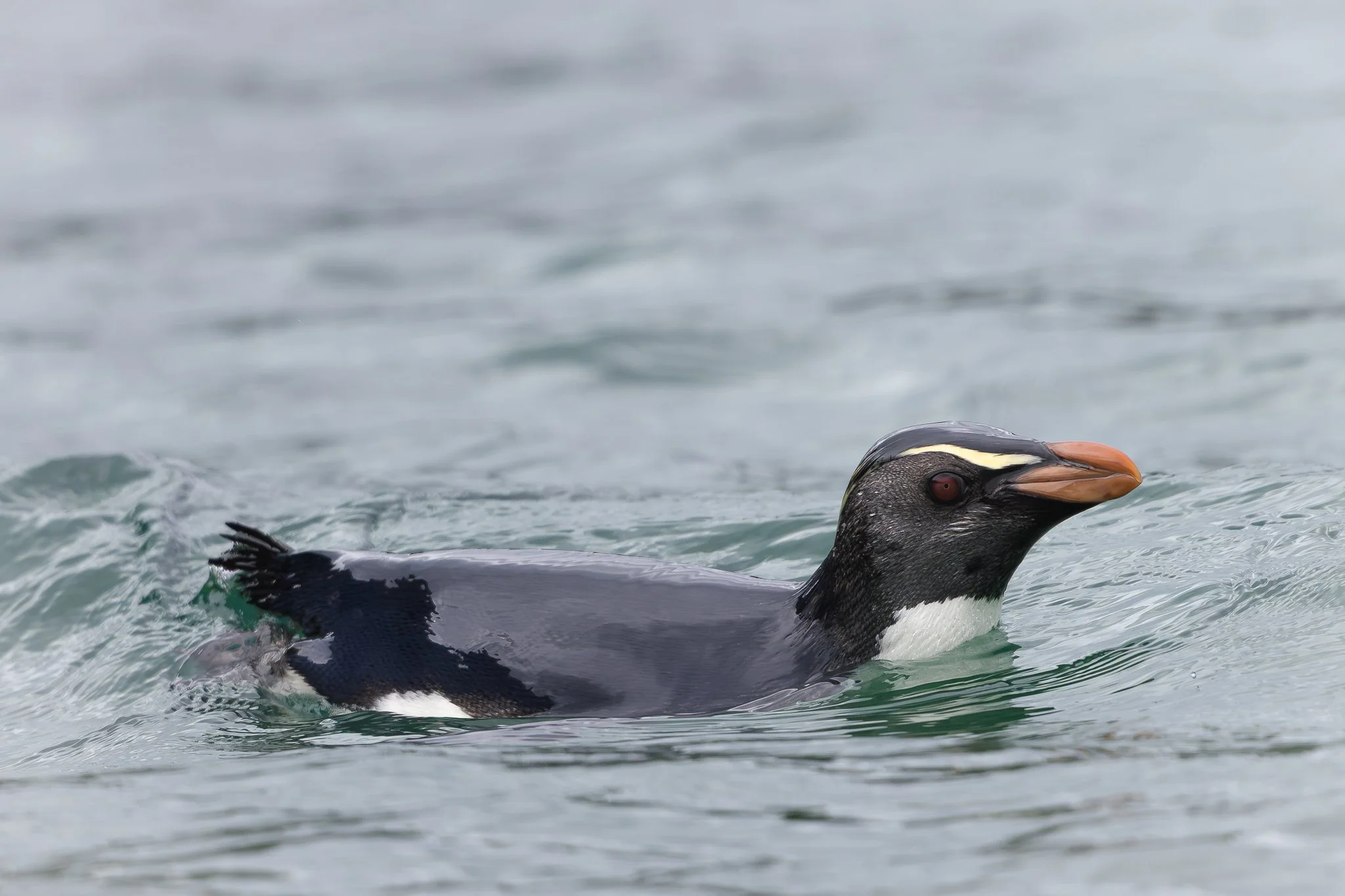
My first wild tawaki encounter for the trip. This individual surfaced briefly within a few metres of our boat. [1/2000, f/7.1, ISO 800].
Around 20 minutes later, we pulled into a sheltered bay where there was the possibility of seeing a group of tawaki that use a coastal cave as a resting site. We were incredibly fortunate to find a pair sitting together on the shoreline, looking rather content after what had clearly been a successful morning of fishing. This was the exact scene I had dreamed of experiencing- the bright white belly feathers of a tawaki contrasting against the dark, rugged cliffs of the Rakiura coastline. I couldn’t believe how lucky I was.
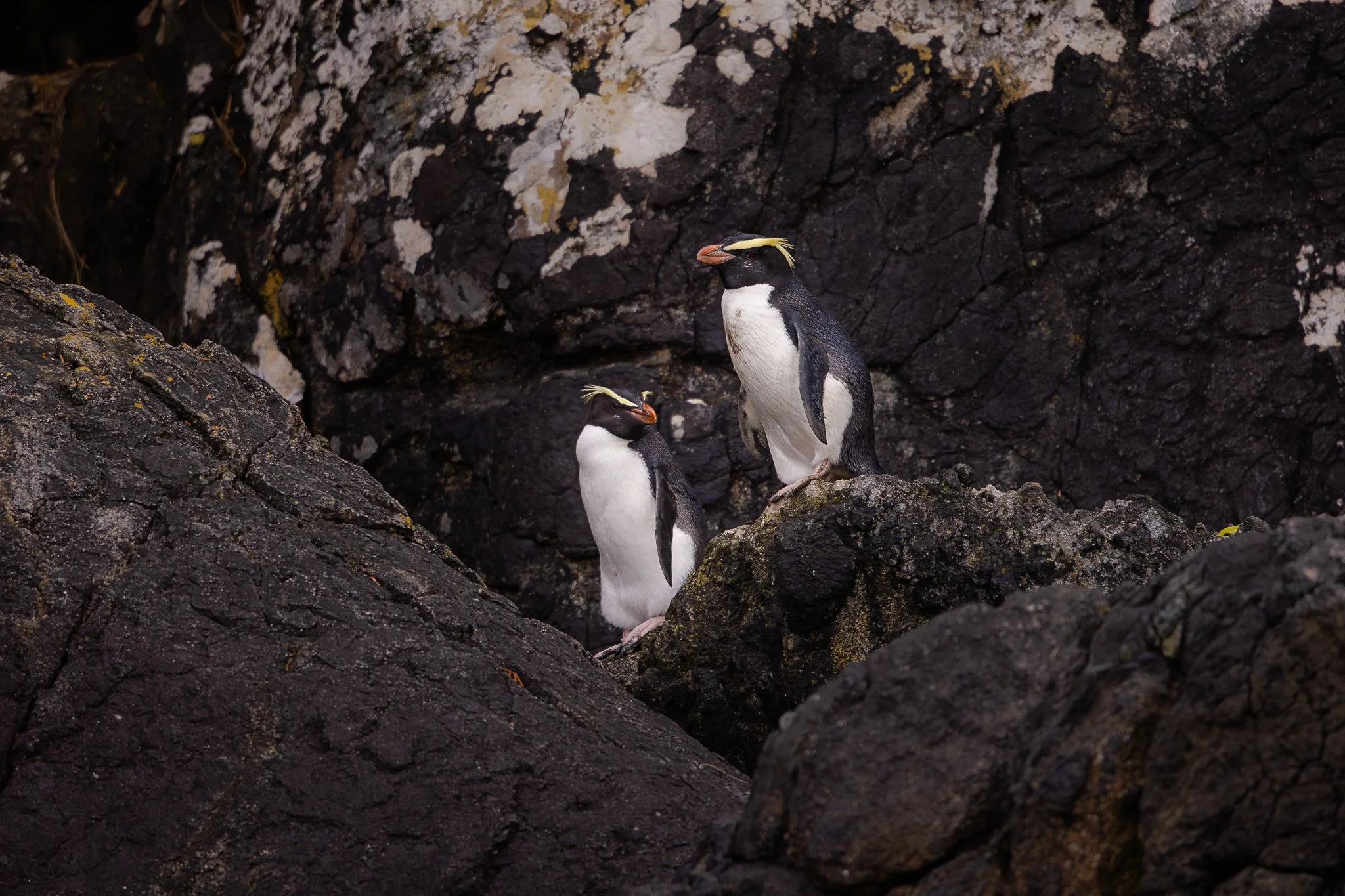
One particularly well-fed-looking pair of tawaki. This encounter was more than I could have hoped for during the entire trip. [1/2000, f/7.1, ISO 800].
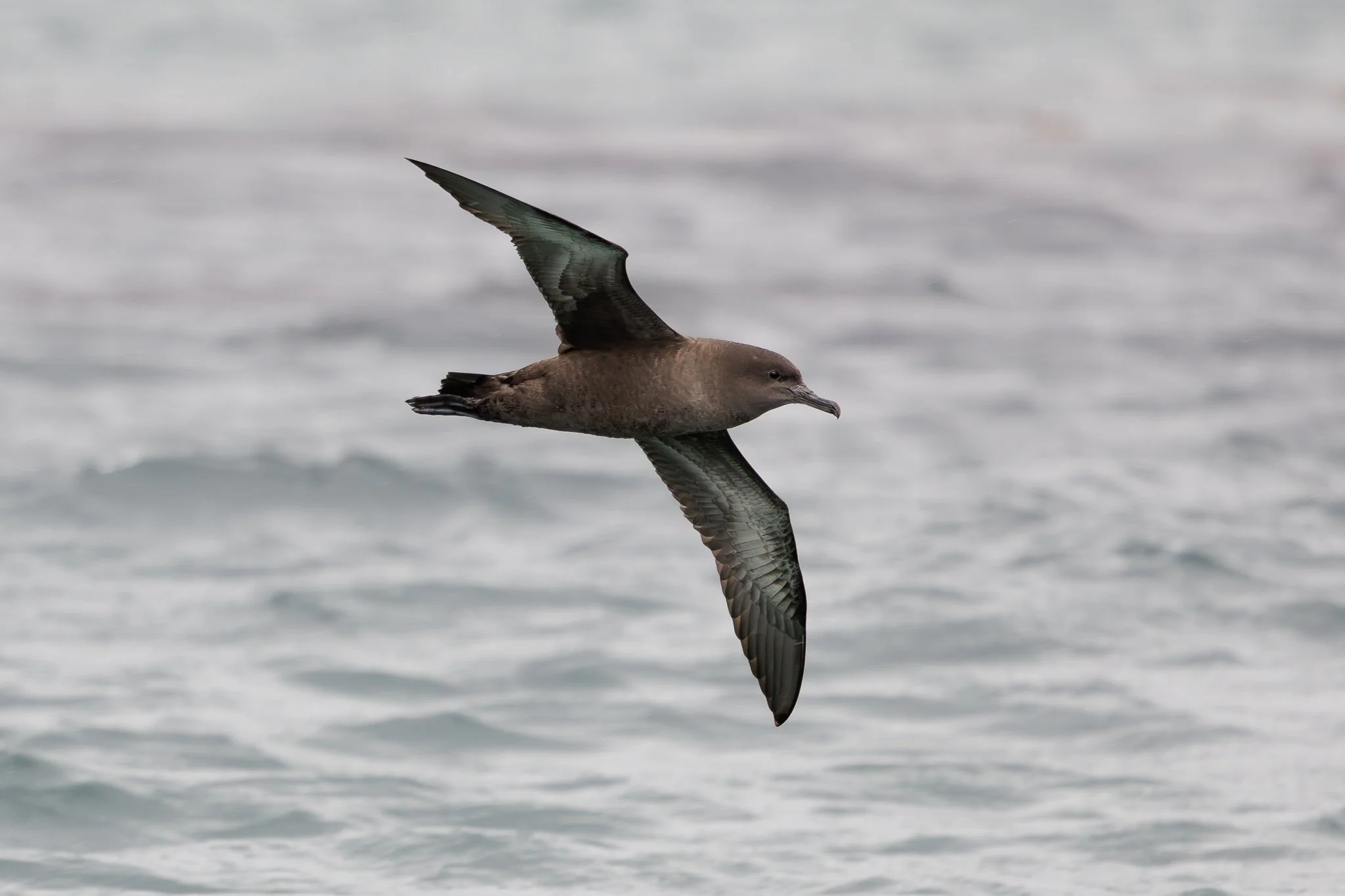
Some of the other notable encounters from this trip included a group of four tītī (sooty shearwaters) feeding close to shore, multiple white-capped mollymawks venturing close to the boat and allowing me to trial some low, wide-angle photography, and several rafts of kororā (little blue penguins) bobbing amongst the waves. Kororā remains high on my list of species to photograph properly, but unfortunately the combination of sea conditions and light meant I wasn’t able to capture the images I was hoping for. But this is just a reason to return.
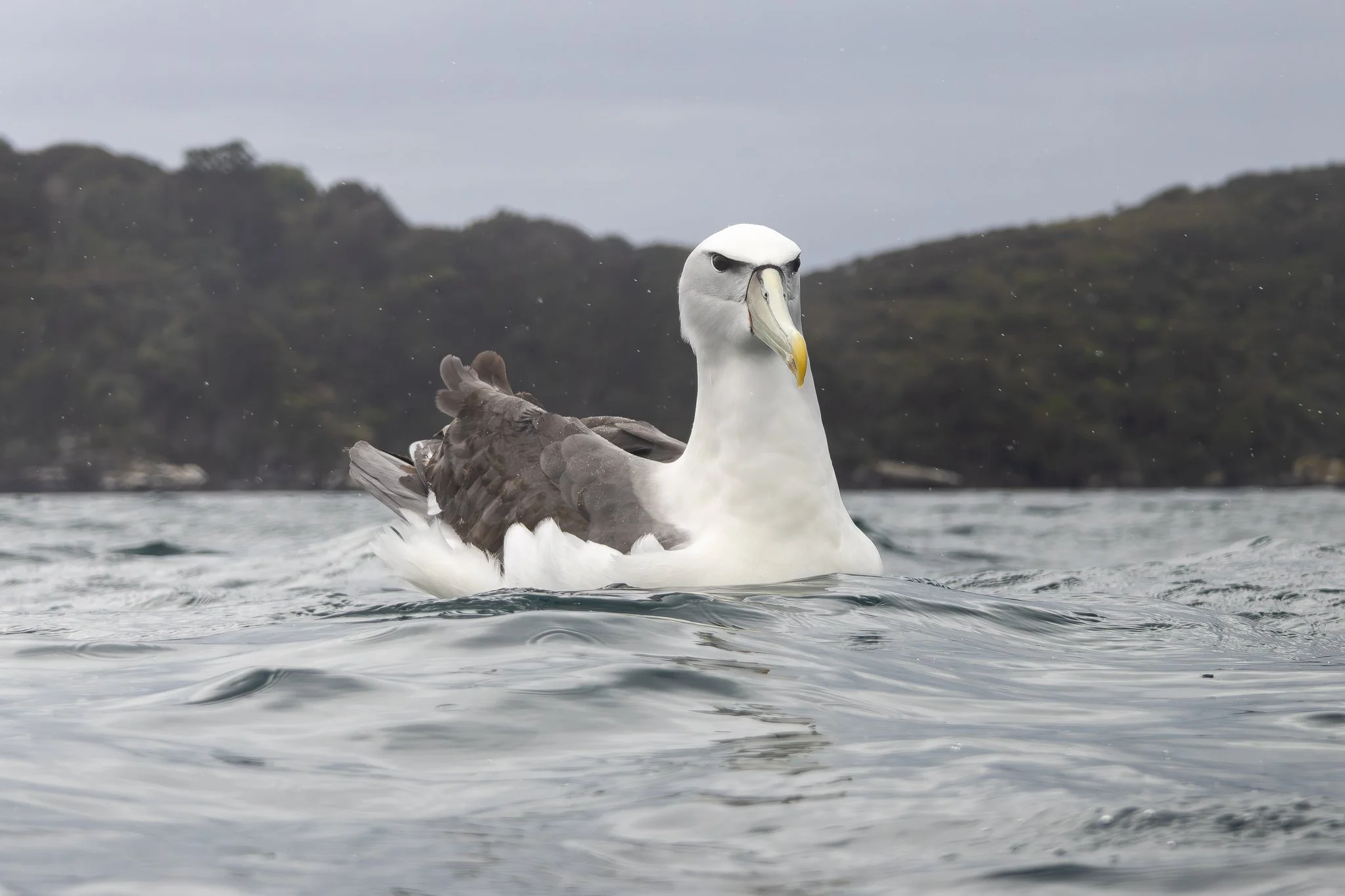
White-capped mollymawks were the only albatross species we encountered on our trip, but we were certainly spoilt by both the number of birds we saw and the incredible quality of the encounters. [1/3200, f/6.3, ISO 500].
While the weather wasn’t perfect, with waves of rain passing through and rough seas preventing us from reaching some of the outer islands within the Rakiura group, it was still an unforgettable start to my time on the island. And somehow, the day still managed to get even better. To finish off the trip, we travelled up the Southwest Arm, an unexpected but incredibly memorable experience. This part of the island is only accessible by boat during high tide, allowing the water level to rise right up against the edge of the forest. The result is a truly magical landscape, where harakeke, mānuka, and countless other native plant species appear to be thriving while partially submerged along the shoreline. It was a completely unique environment and definitely one of the highlights of the trip.
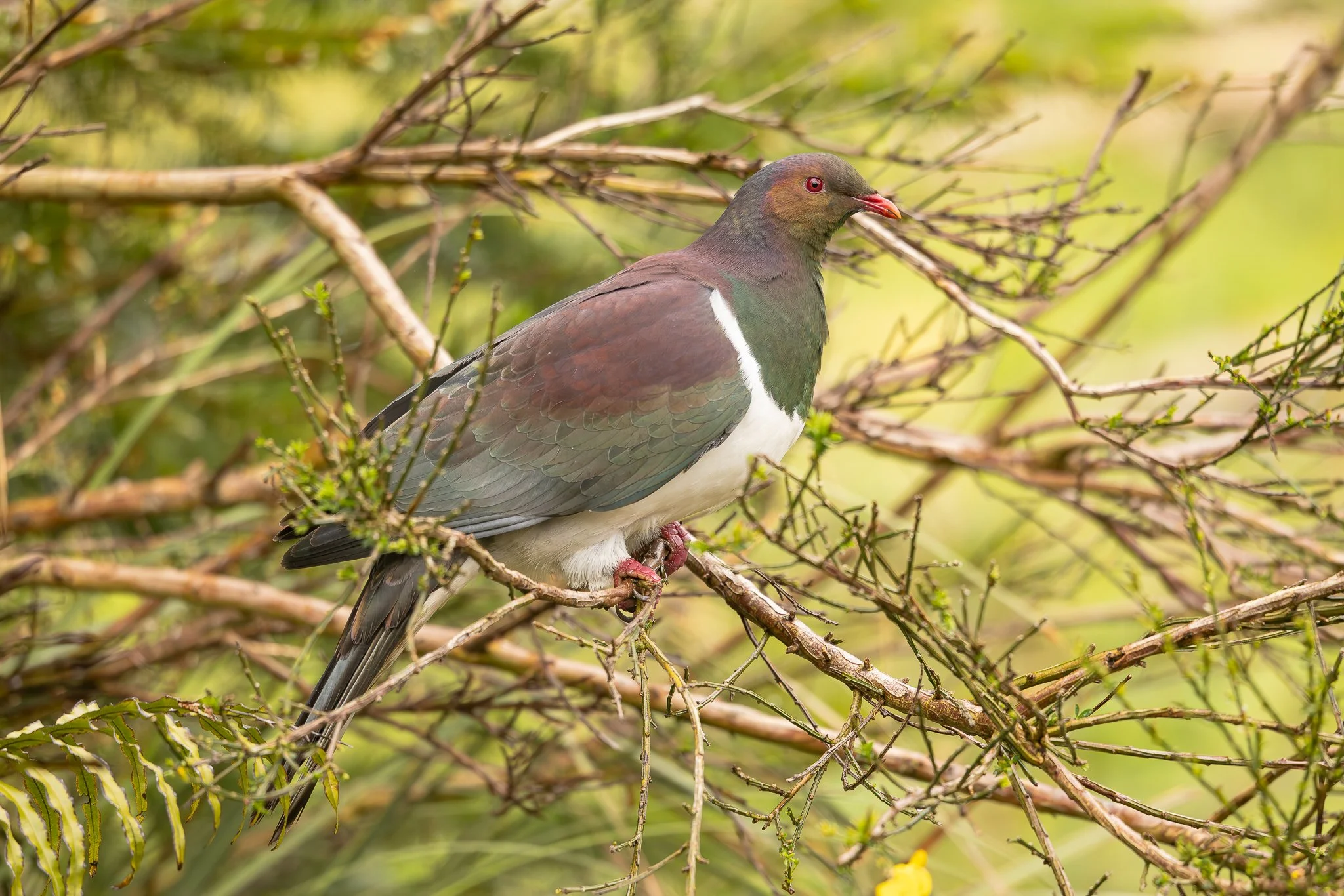
After such a phenomenal introduction to Rakiura, I headed into Oban to find some dinner. But even while walking through the most settled part of the island, it was impossible to ignore how special this place was. Flocks of kākā screeched overhead, while kākāriki, tūī, and korimako (bellbird) filled the air with their incredible calls. Kererū moved confidently through open areas and even foraged on the ground, displaying a level of comfort around people that is becoming increasingly rare in many parts of Aotearoa.
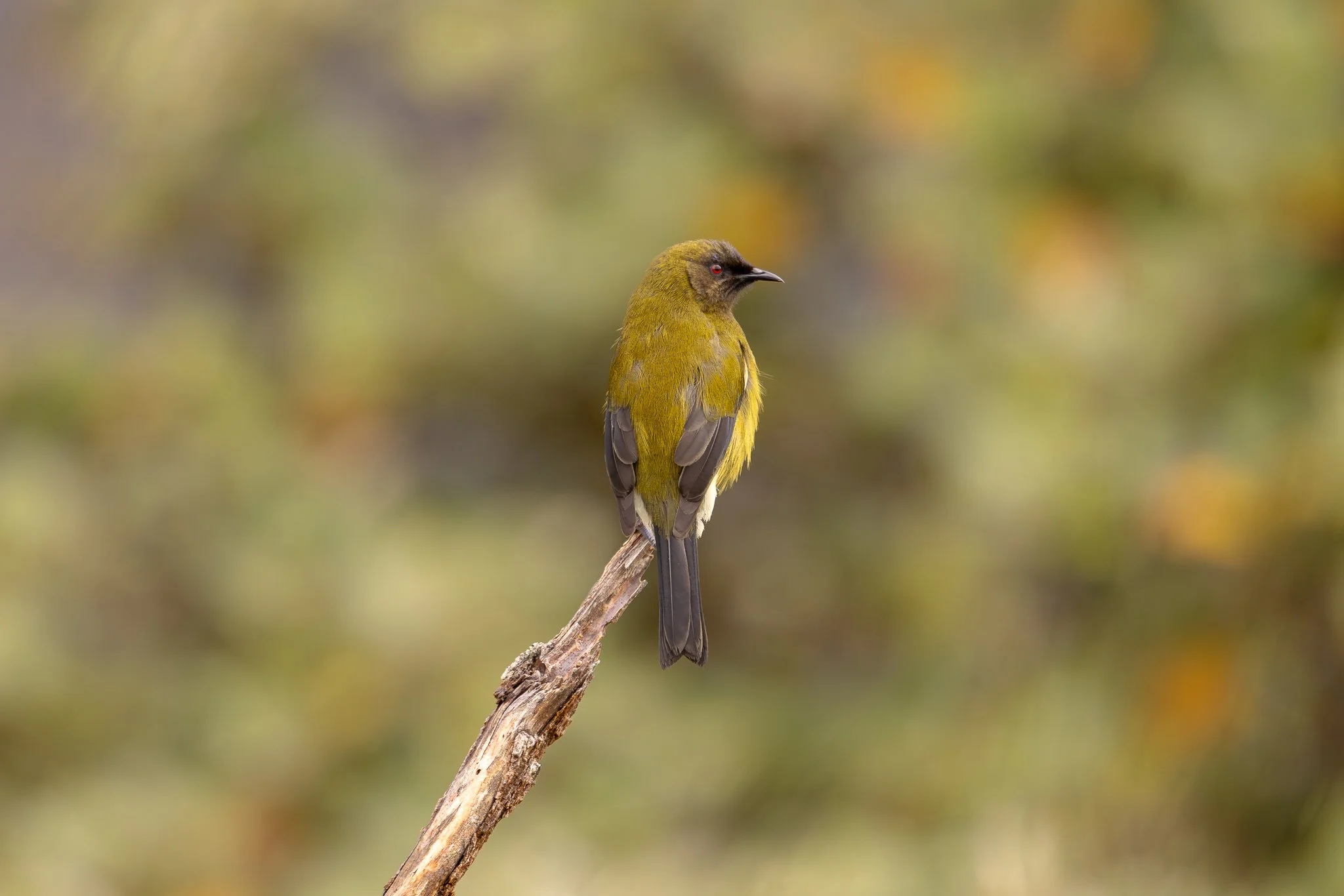
Wherever I wandered around the island, the forest echoed with birdsong. Korimako were among the most vocal contributors, and I was thrilled when this perfectly positioned individual offered me a very brief photogenic moment. [1/1250, f/7.1, ISO 1000].
This was a testament to the incredible conservation work carried out by DOC and the local community through ongoing predator trapping and introduced mammal control efforts across the island. Like much of Aotearoa, there is still a long way to go, but seeing native wildlife thriving around Oban gave me a sense of hope for what the future of New Zealand could look like.
My second day on Rakiura was dedicated entirely to exploring the island on foot. I wanted to cover as much ground around Oban as possible, not only to experience the incredible landscapes but also to maximise my chances of encountering some of the island’s wildlife. I also had a small goal in mind to hopefully find a tawaki from land.
One of the first things that stood out as I began exploring was the incredible native forest. Huge rimu, southern rātā, and kahikatea trees towered above the canopy, with the forest stretching all the way down to the coastline. The combination of ancient trees, dense vegetation, and the constant sounds of native birds created an atmosphere that felt truly wild. Rakiura is a special place. But little did I know, nothing I had experienced so far would compare to what was waiting for me on Ulva Island.
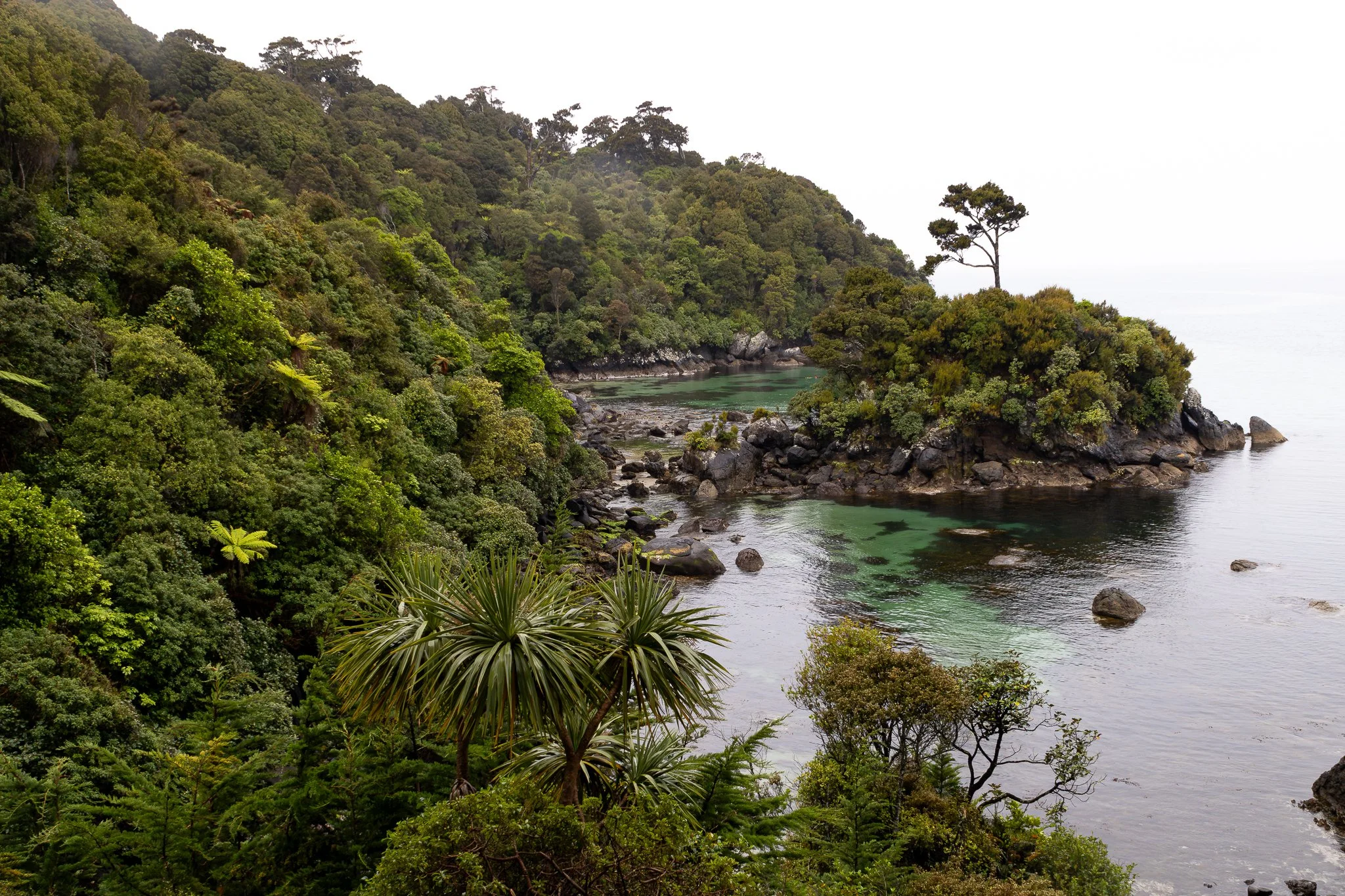
Every now and then I would come into a clearing along the coastal tracks, and I couldn’t help but capture these breathtaking landscapes. [1/100, f/ 9.0, ISO 640].
Some of the species I was fortunate enough to see while exploring the coastal tracks included korimako (bellbird), riroriro (grey warbler), kākāriki (red-crowned parakeet), and even a few shining cuckoos who migrate to Aotearoa each year from the Solomon Islands to breed. But as I entered a clearing overlooking a small bay, I heard a call that sounded unmistakably like a penguin.
I quickly made my way down the track towards the bay, hoping I might catch a glimpse of the bird responsible for the call. Luckily, the tide was out, but reaching the shoreline still required carefully navigating across the incredibly slippery rocks. And sure enough, as I rounded a large seaweed-covered boulder, a tawaki appeared right in front of me.
Wanting to minimise any disturbance, I didn’t move any closer. Instead, I used the large rock between us to keep myself hidden from the bird’s view. I switched to using the LCD screen on my camera and carefully poked it around the side of the rock to capture a few images. Remarkably, the tawaki seemed completely unfazed. It continued moving between the rocks, even giving me several opportunities to photograph it hopping from rock to rock just metres away. This was exactly the kind of encounter I had hoped for when coming to Rakiura, and somehow, I hadn’t even been on the island for 24 hours!
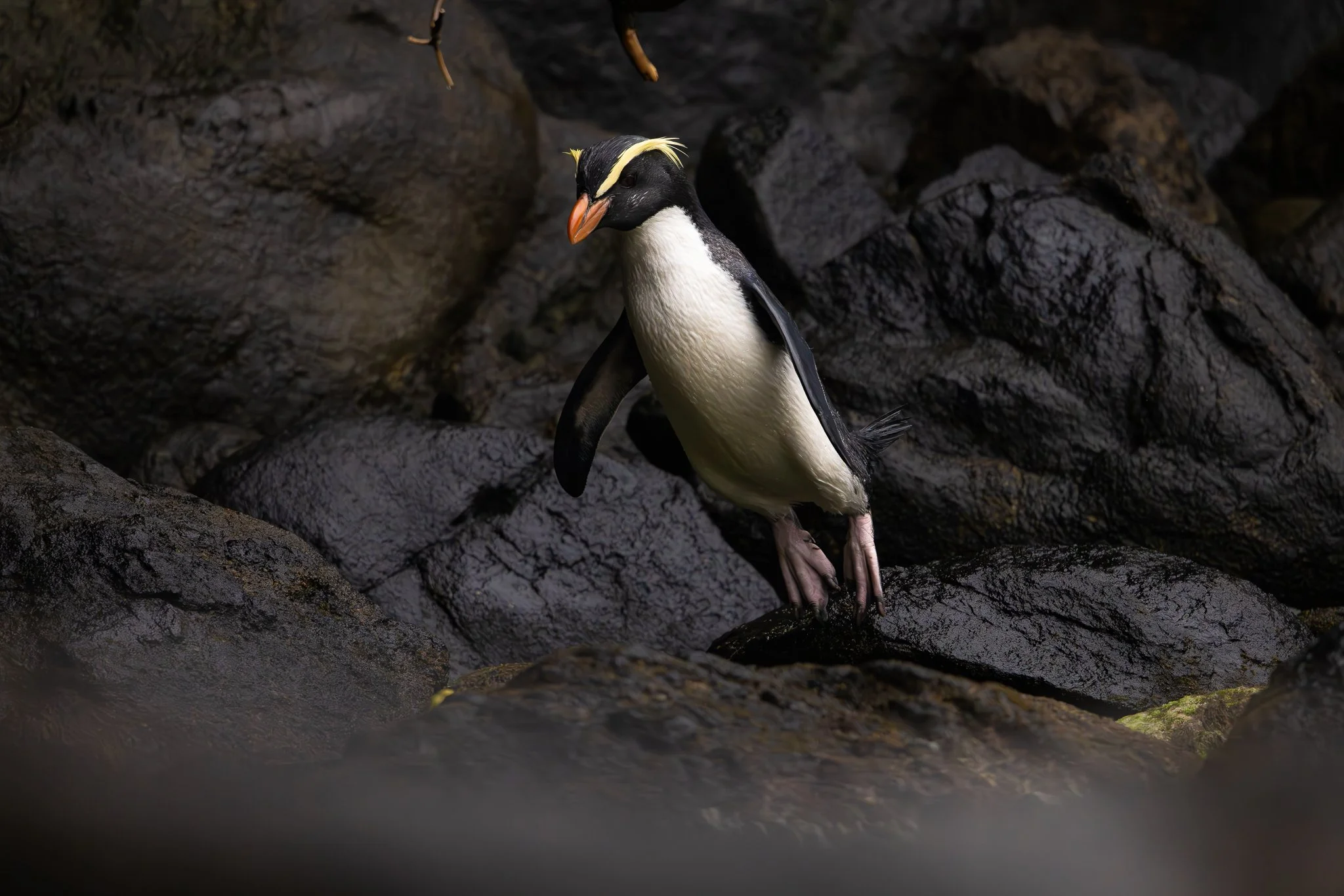
This was the shot I had dreamed of. A Tawaki frozen mid-jump, its bright white belly and vivid yellow crest standing out against the dark, rugged coastline. A dream come true. [1/3200, f/7.1, ISO 12800]
The rest of my second day was spent exploring the tracks out towards Horseshoe Point and later, Ackers Point. The Horseshoe Point walk showcased some of the incredible coastal scenery Rakiura has to offer, with secluded bays, rugged shorelines, and impressive native forest stretching right down to the ocean. While there were signs of browsing pressure from introduced ungulates in the understory layer, the forest was still incredibly impressive and gave me a glimpse of just how special this place is.
Some of the memorable wildlife encounters along this walk included more shining cuckoos, korimako (bellbird), an inquisitive pair of kākā coming in to investigate me, and a pair of kererū feeding amongst kōwhai flowers. Since I spent so much time exploring around Horseshoe Point, I arrived at Ackers Point later in the day. Throughout the walk to the end of the peninsula, I could constantly hear the calls of kororā (little blue penguins) just offshore. Unfortunately, the dense coastal forest made it impossible to get a clear view of the water, so I wasn’t able to see them, but that just gives me another reason to return to fulfil my goal.
The calls of riroriro followed me all the way to the end of the track, where it became obvious that tītī (sooty shearwaters) were nesting in good numbers. The high density of burrows, combined with the ongoing predator control efforts from the local community, showed just how important these conservation efforts are in allowing these colonies to persist. To finish off an already incredible day, I headed into town for dinner at the local fish and chip shop, Kai Kart. This is definitely a place I would highly recommend if you ever find yourself on Rakiura.
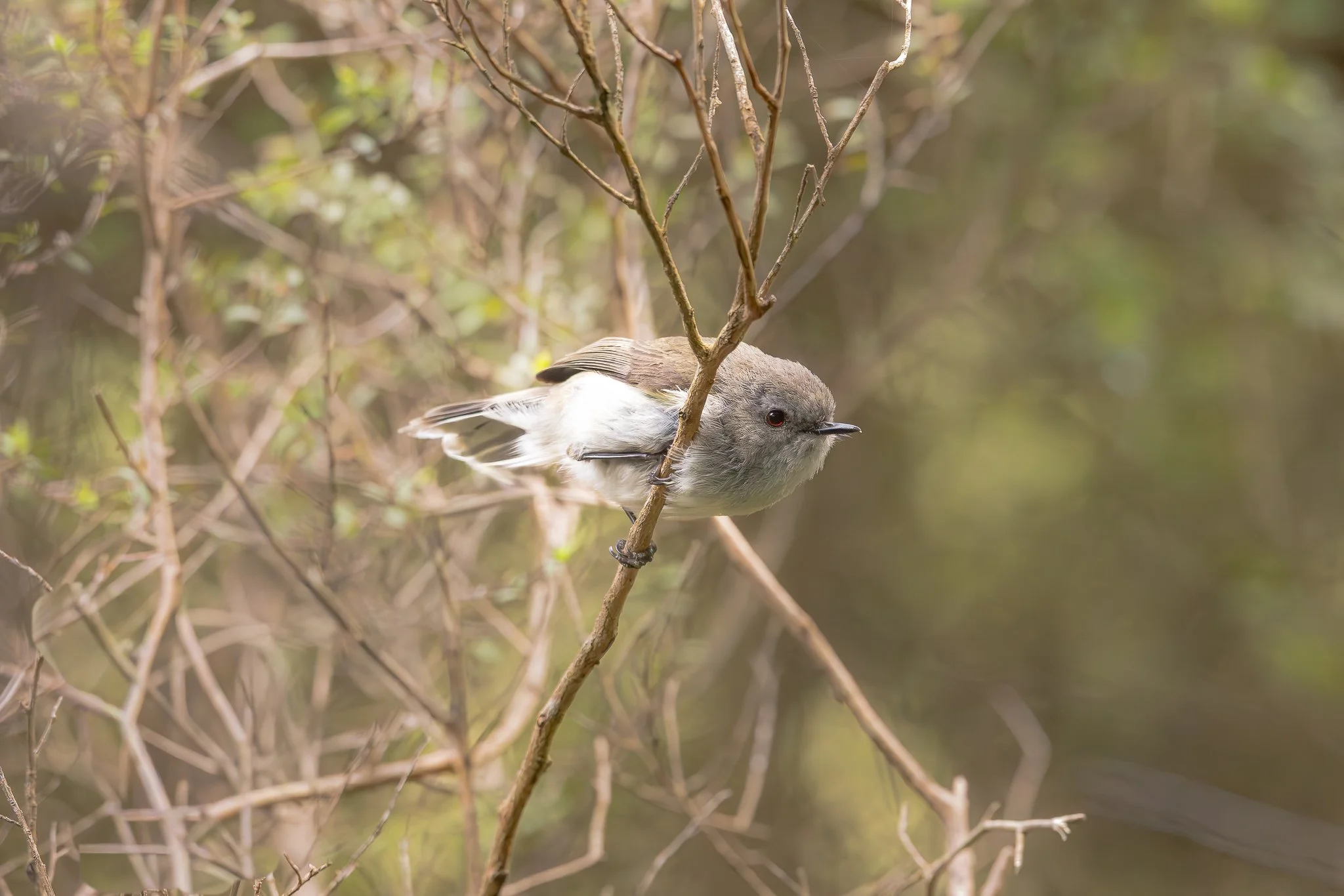
Riroriro are one of the trickiest birds to photograph, rarely sitting still long enough to offer a clear shot. After plenty of patience and failure, I was thrilled to come away with one image I was truly happy with. They may be small, but they produce one of my favourite birdsongs in Aotearoa. [1/200, f/7.1, ISO 20000]
For day three, I decided to explore a different part of the island, heading southwest from Oban towards Golden Bay to explore the area and walk the Ryan’s Creek Track. This area was further from town, and I was hoping it would provide opportunities to encounter some different wildlife, including pakake (New Zealand sea lions).
Before my trip, the South Island had been hit by some severe winds, which had resulted in several trees coming down along the track. This meant my walk became much more of an adventure than expected, as I climbed over fallen rimu, squeezed around enormous old-growth trees, and even had to bush-bash through sprawling supplejack vines in places. To make things even more challenging, the rain eventually set in, creating one of those true southern wilderness experiences. A small piece of advice if you ever head to Rakiura- don’t forget your rain jacket as it rains on average 265 days of the year and you can get all four seasons inside an hour!
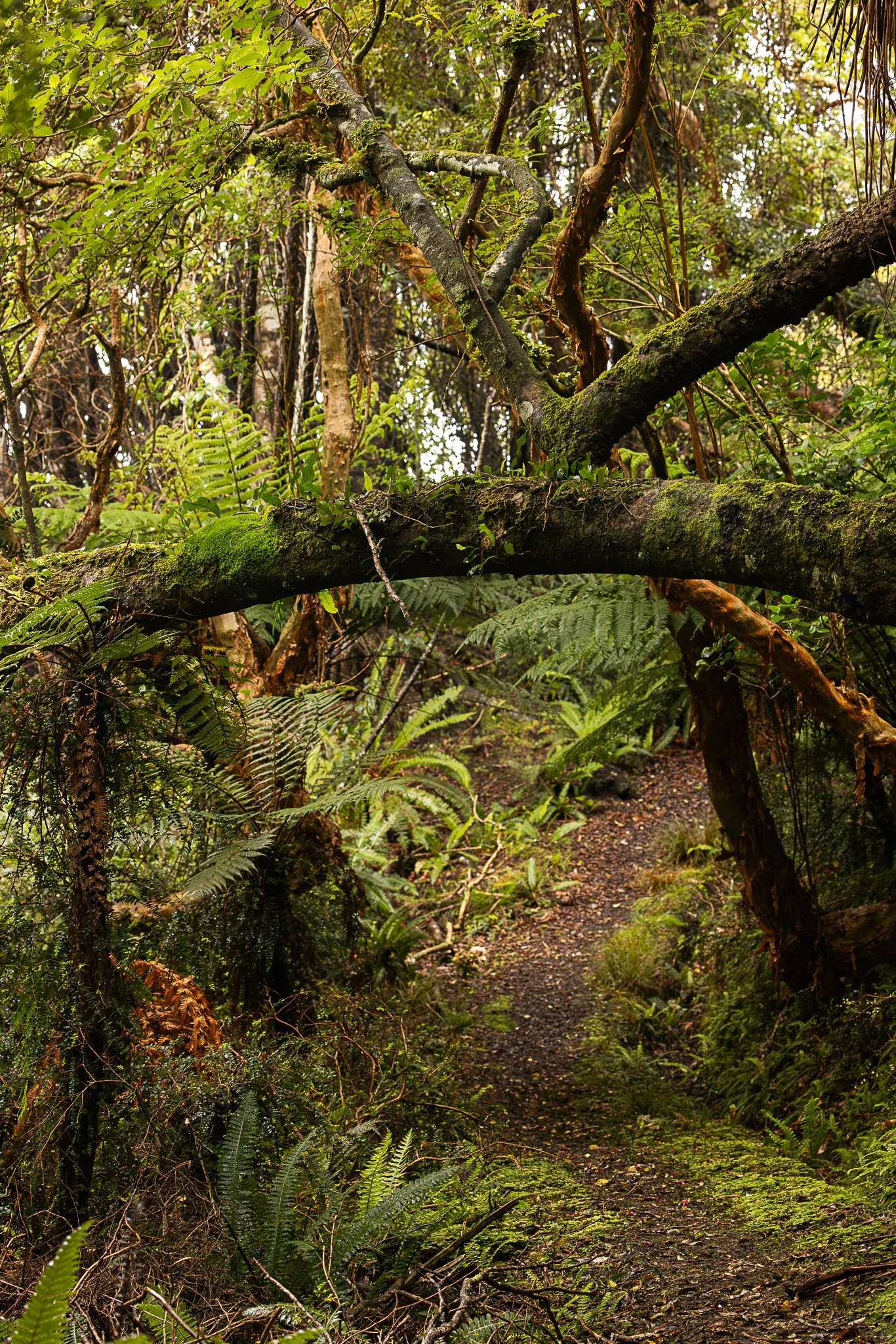
A small snapshot of the moss-covered, lush walking tracks that wound their way through the island. [1/50, f/8.0, ISO 3200]
But this challenging walk rewarded me with some of the most incredible southern rainforest scenery, as well as an encounter I won’t be forgetting anytime soon. I descended into a small cove to take a break and change into some dry clothes when suddenly, I heard an enormous roar echoing around the cove’s walls. At first, I couldn’t figure out what had made the sound. I looked around, trying to see the animal that produced it, but then it clicked. There was only one animal that could make a noise like that on the island. A huge male pakake.
He moved through the water with confidence, roaring loudly and asserting his dominance over any subordinate males that may have been nearby. I quickly made my way to the opposite side of the cove, especially after just managing to navigate around a fallen rimu tree. The thought of being trapped between a fallen tree and a testosterone-fuelled sea lion searching for a mate wasn’t exactly an ideal situation.
Once I reached the other side of the cove and gained some elevation, I watched as this enormous male hauled himself onto the beach. He immediately began sniffing around the exact spot where I had been standing only moments earlier. The male then began following my path up the track, and at that point, I decided it was best to end the encounter there. I didn’t want to disturb him any further or cause him to waste valuable energy investigating me, so I continued on my way. However, standing there listening to the roar of this massive male echoing between the steep coastal cliffs was an experience I won’t soon forget.
For my accommodation on the island, I was incredibly lucky to stay with a wonderful and conservation-focused family just outside the township of Oban. The location was perfect for wildlife, as being slightly removed from town meant there was less disturbance and the animals appeared much more comfortable. Every evening, almost like clockwork, a group of adolescent kākā would arrive at the property, chasing each other through the backyard and moving between the ti kouka (cabbage tree) and harakeke. It was an incredible sight to witness. I enjoyed watching these interactions so much that I didn’t even realise I had never taken a single photograph of them until I returned home. But sometimes I think that’s a good thing as sometimes interactions like this with wildlife are better appreciated without the pressure of the camera.
This lovely couple welcomed me into their home, and we spent hours talking about the incredible conservation work they had been involved in throughout their careers, along with some of the fascinating stories they had collected along the way. I was also fortunate enough to try pāua and moki for the first time during my stay, and it’s safe to say I was very impressed.
For my final adventure on Rakiura, I dedicated the entire last day to visiting Ulva Island. This predator-free sanctuary had been high on my bucket list for years, and after studying the conservation efforts that have gone into protecting this place during university, I was incredibly excited to finally experience it for myself.
I caught the earliest ferry possible to maximise my time on the island which only takes five minutes from Golden Bay. As soon as we approached the wharf at Ulva Island, the first thing that stood out was the birdsong. It was loud, constant, and immediately filled me with excitement of the possible wildlife encounters I could have. Ulva became predator-free in 1996 after the final rats were removed, meaning it has now been protected for almost 30 years. It has also never had stoats, ferrets, or possums present on the island, allowing its fauna and flora to thrive in the absence of some of the biggest threats faced by mainland species.
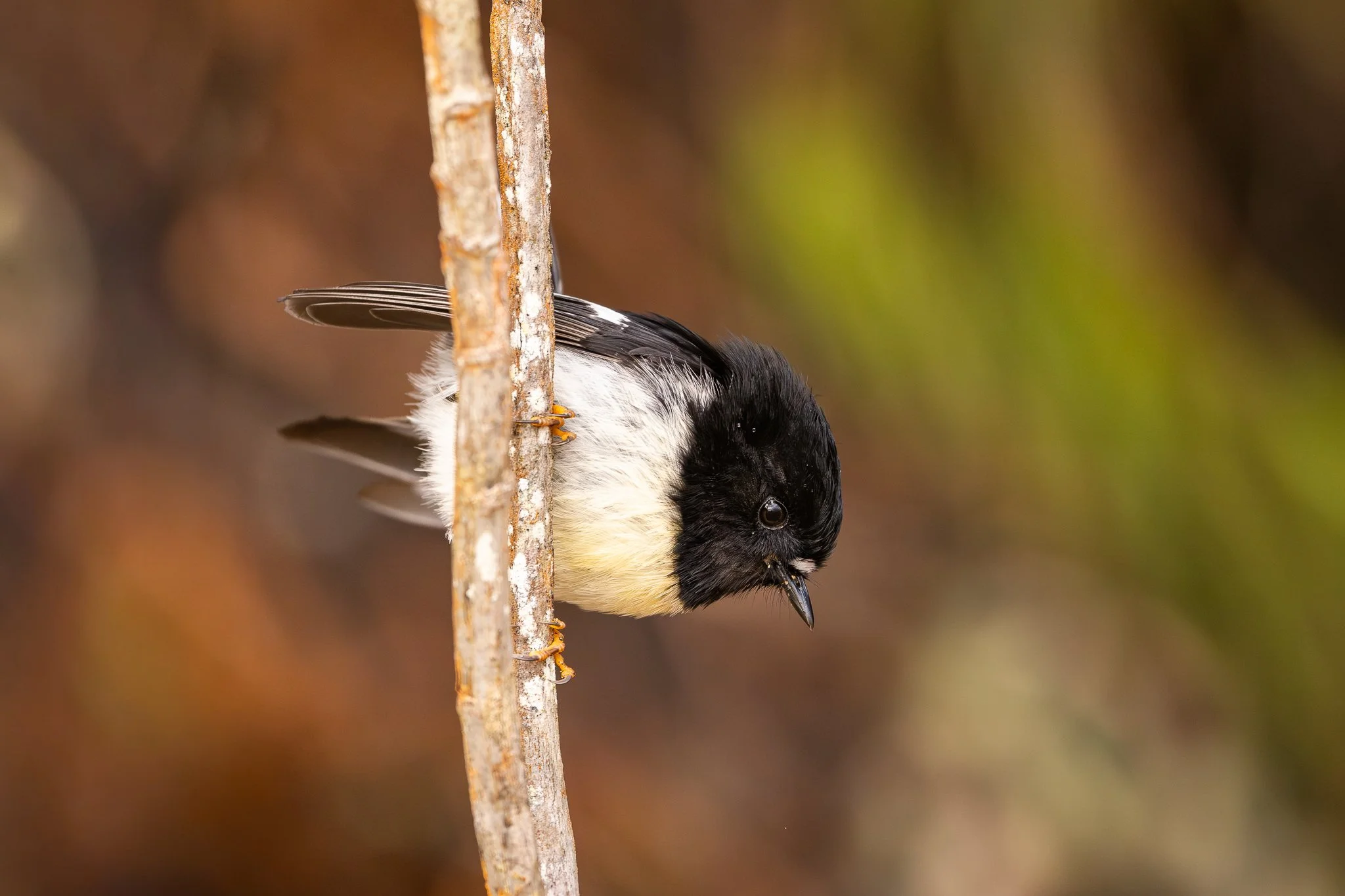
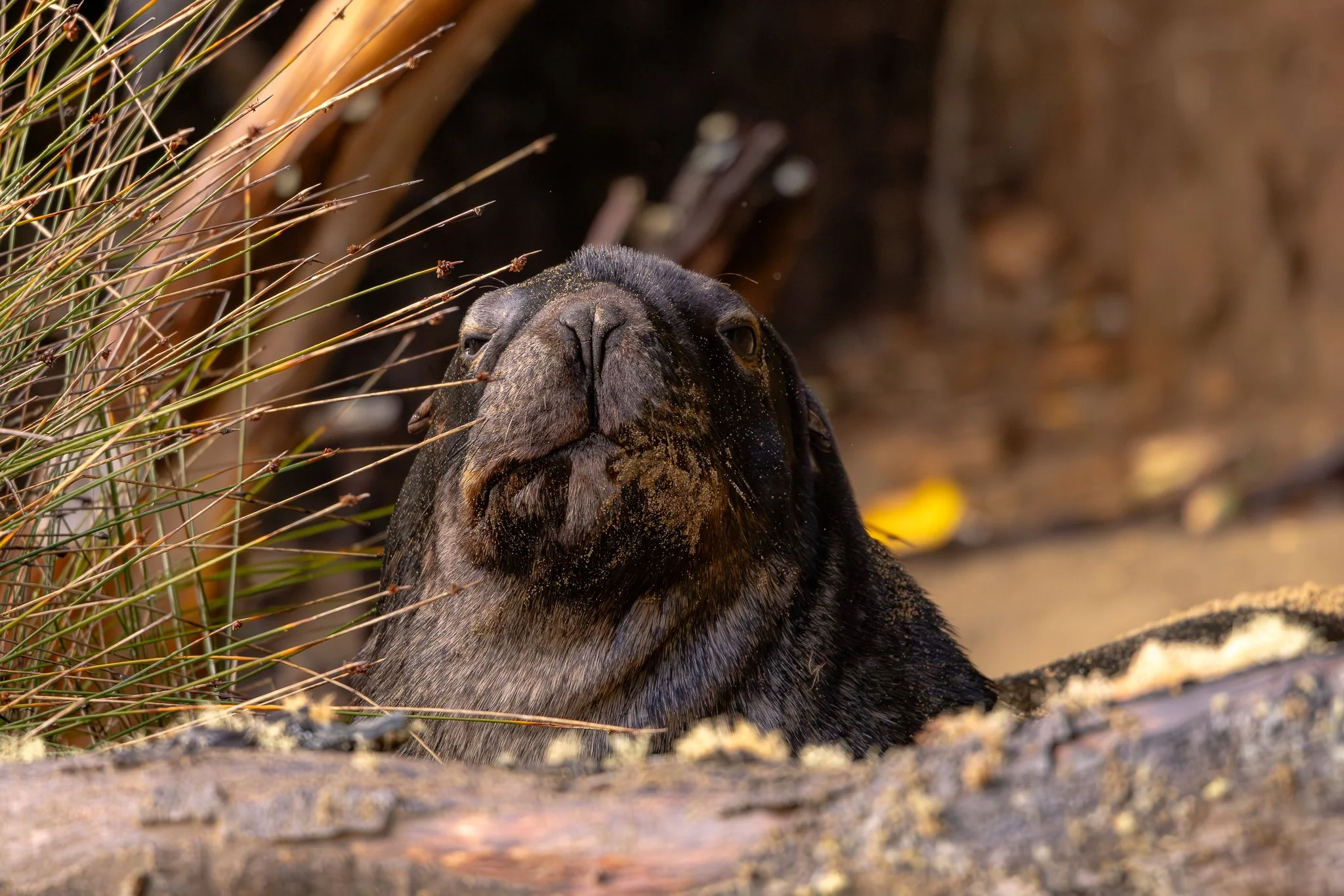
I first headed towards Sydney Cove which is situated on the northern side of the island, hoping to find more pakake. I was rewarded with a sleeping male resting at the far end of the beach, tucked behind a large piece of driftwood, perhaps trying to avoid the attention of the tourist cruise ship that was visiting the island that day. I couldn’t blame him. As I explored more of the beach, I was also treated to sightings of ngirungiru (South Island tomtit), tīeke (South Island saddleback), and pīpipi (brown creeper). I hadn’t expected to photograph pīpipi during this trip, but I was more than happy when one individual from the flock came close enough to the forest edge, allowing me to capture an image of it foraging for invertebrates beneath patches of lichen. It was safe to say Ulva Island was already living up to expectations.
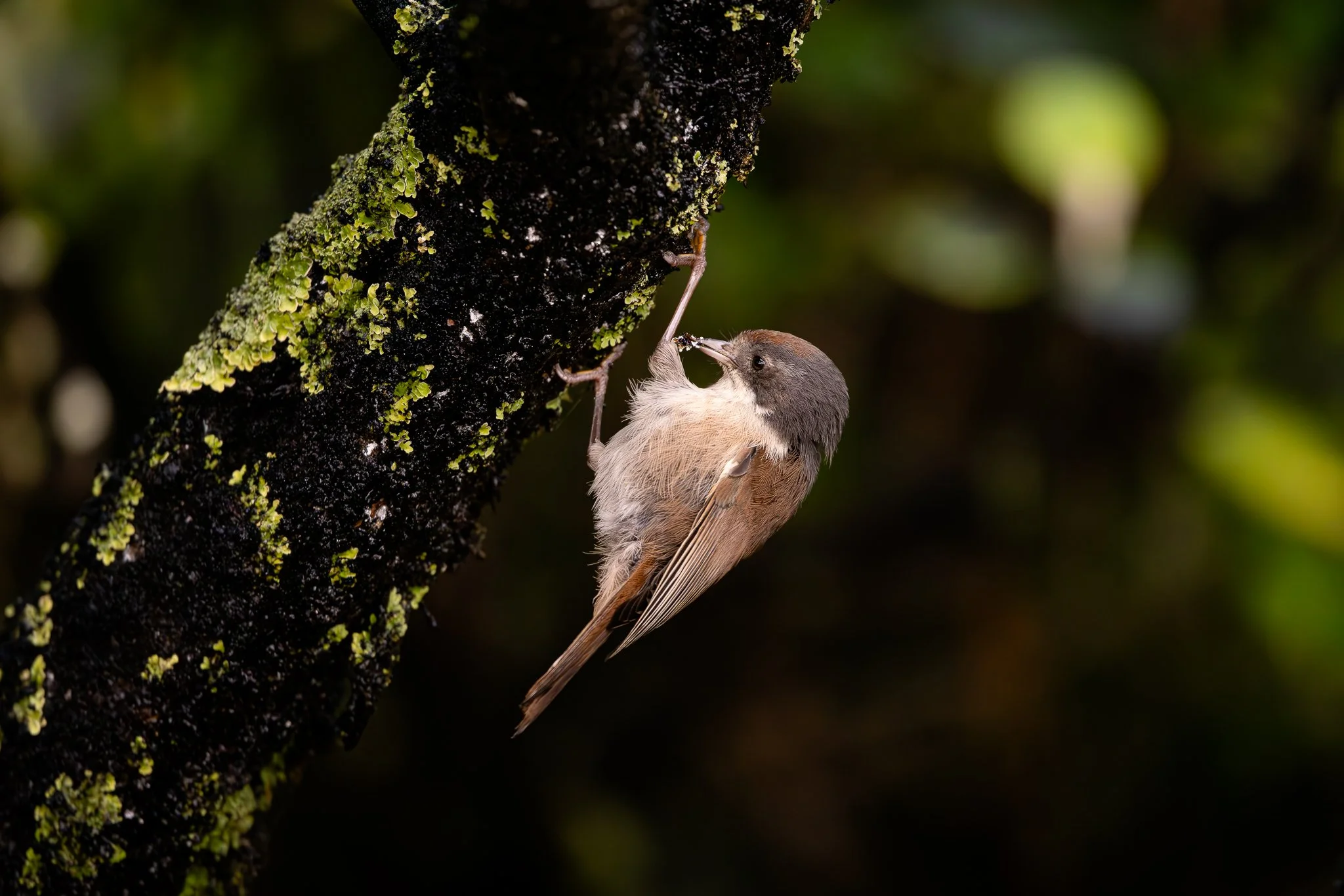
Pīpipi are another of Aotearoa’s more challenging birds to photograph. Fortunately, it helps when you're on a predator-free sanctuary like Ulva Island, where they are thriving thanks to the incredible conservation work that has taken place here. [1/1250, f/7.1, ISO 12800]
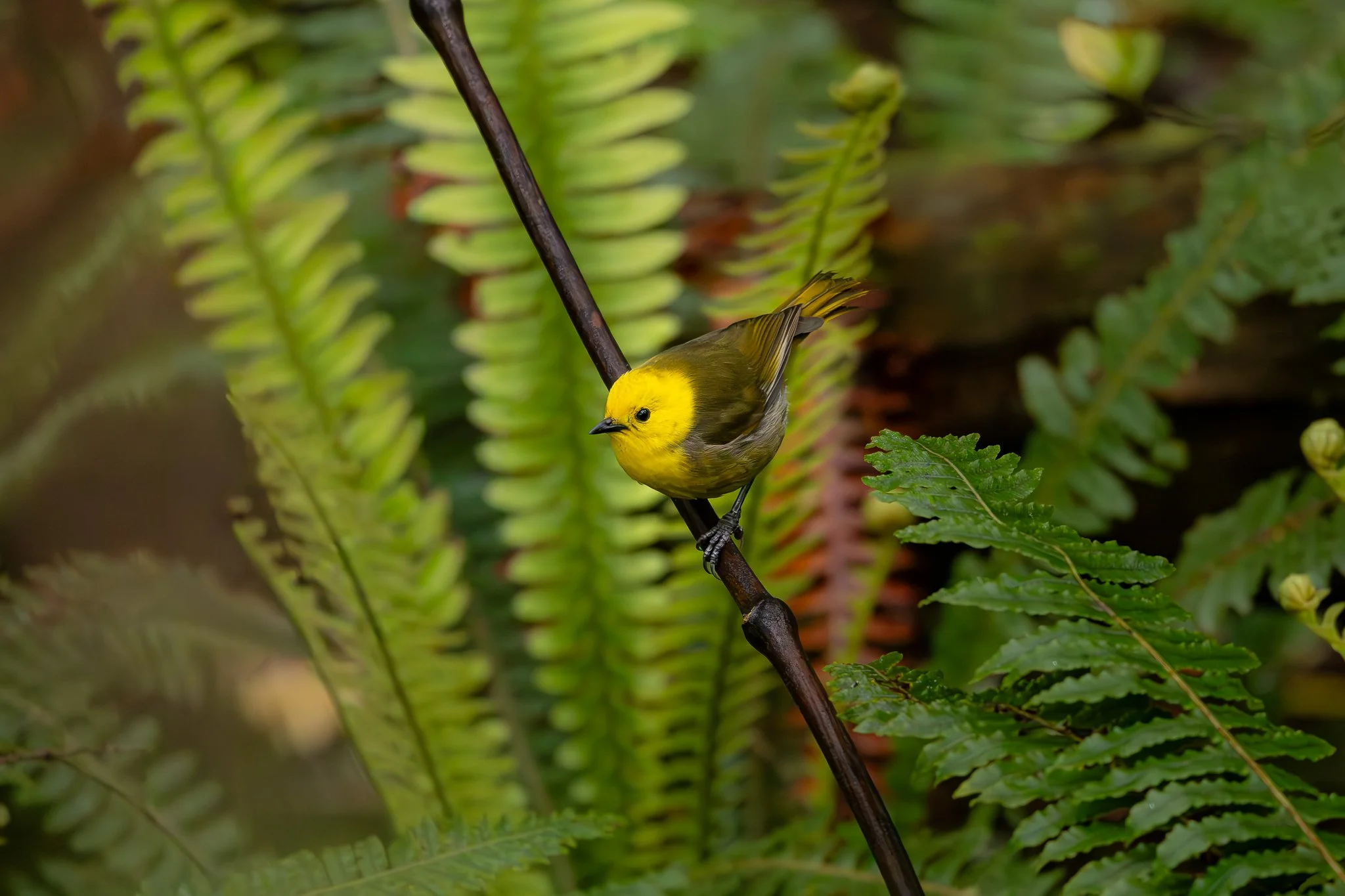
My main photographic goal for Ulva Island was to capture mohua (yellowhead). I knew that 27 individuals had been translocated to the island from Otago in 2001 and that the population had been doing incredibly well, but I still didn’t want to get my hopes up too much.
Mohua have a reputation for being a challenging species to photograph. I experienced this firsthand while working with DOC in the Hawdon Valley, where they often spend most of their time high in the canopy and rarely sit still for long. However, Ulva Island was a completely different experience. The island was absolutely teeming with these beautiful golden birds. They appeared incredibly comfortable within their environment, often venturing into lower parts of the canopy, and I was even lucky enough to witness several individuals foraging on the forest floor, a behaviour far more common in predator-free environments.
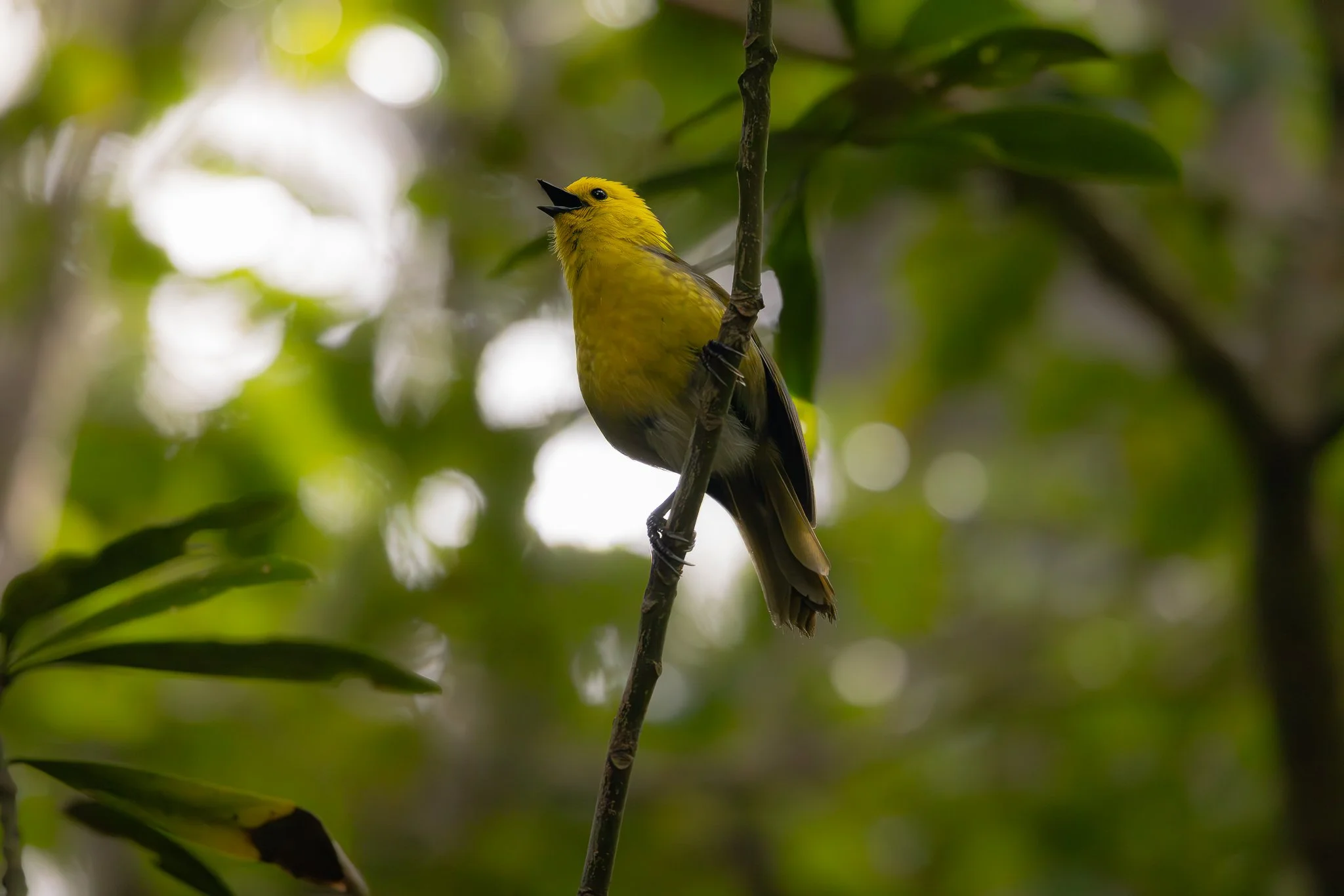
Another dream shot ticked off the list. The canopy on Ulva Island was full of these striking little birds, and I couldn't believe my luck. Mohua have long been one of my favourite species, so finally capturing some images I'm really happy with was a huge highlight of the trip. [1/1600, f/7.1, ISO 10000]
While I wasn’t fortunate enough to encounter a kiwi during the daytime like I’d hoped, I did come across four different weka families, each with chicks of varying ages. These curious birds are well known for their bold behaviour, often sneaking into campsites and attempting to steal food from visitors. They can also present conservation challenges due to their omnivorous diet and ability to swim long distances between islands, potentially reaching predator-free sanctuaries where vulnerable species are being protected. However, on Ulva Island they appear to be thriving, and at least from what I observed, they seemed to be coexisting well within this unique ecosystem.
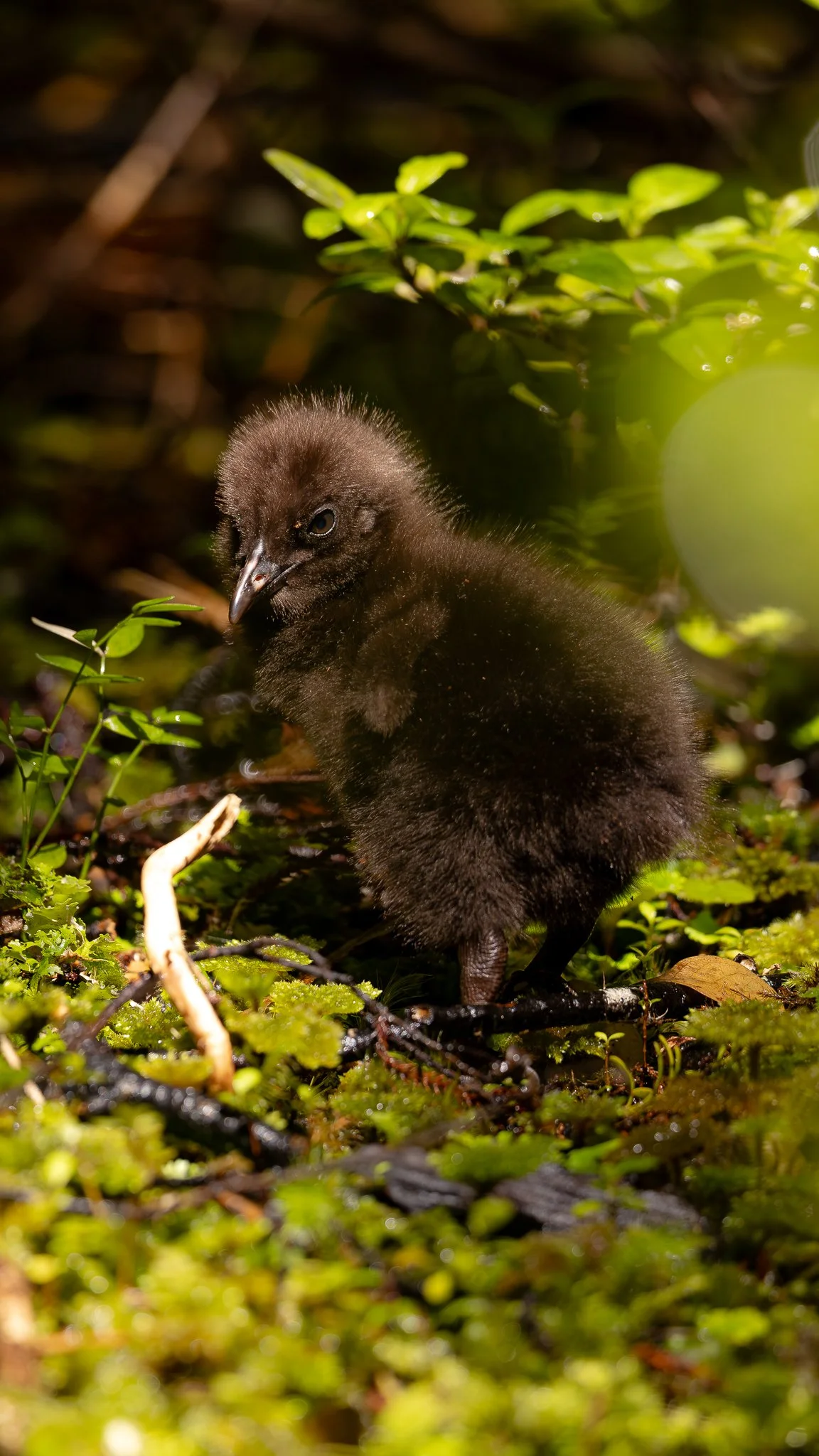
Perhaps the cutest of all the Weka chicks I saw on Ulva Island. I hadn't expected to encounter any chicks during my visit, so finding this little one was a wonderful surprise. [1/800, f/6.3, ISO 800]
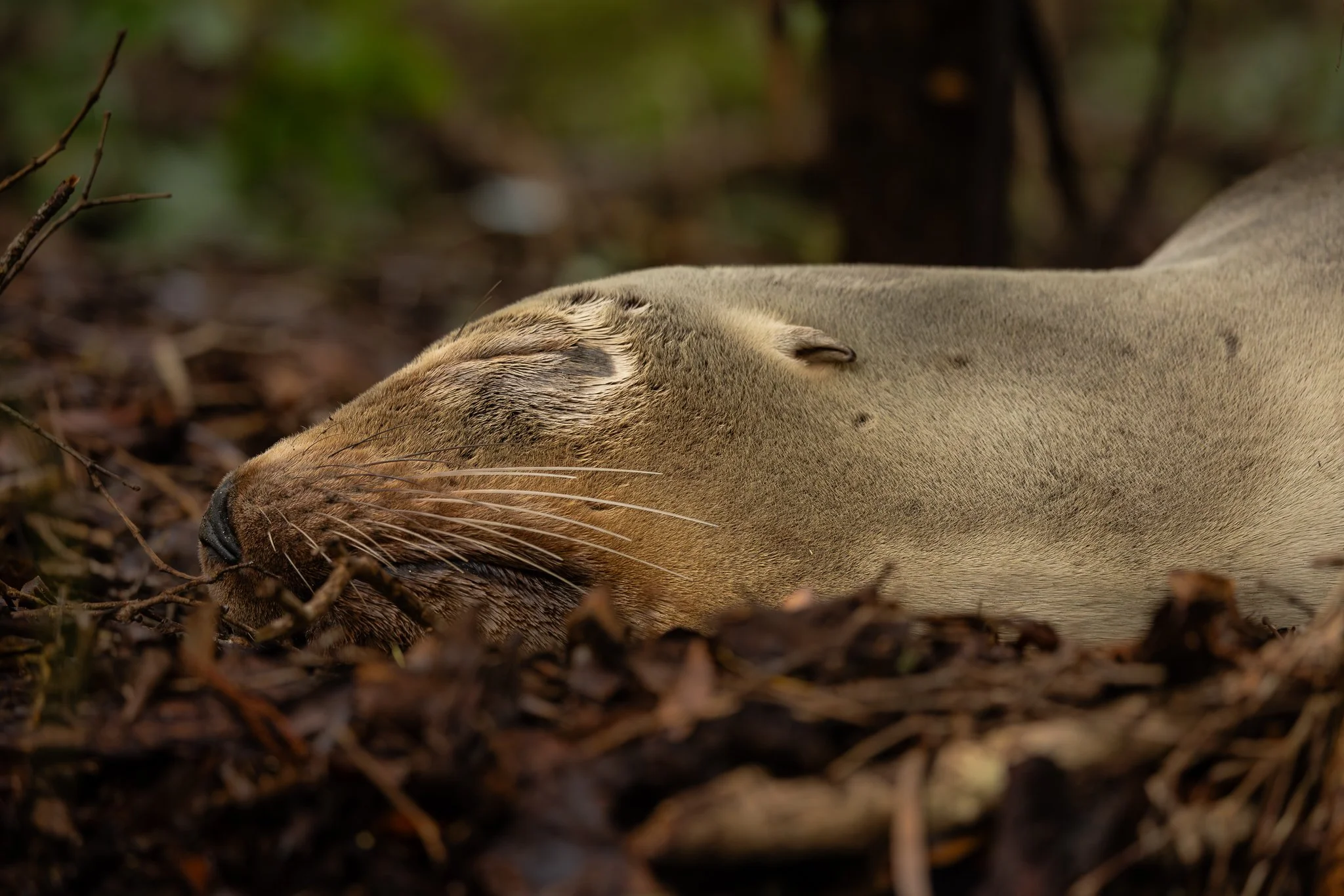
Some of my other memorable encounters on the island included a tītīpounamu (rifleman) family gathering nesting material ahead of the breeding season, nearly walking straight into a sleeping female pakake that had decided the edge of the track was the perfect place for a nap, and kākā moving through the canopy, tearing into the bark of rimu trees to access the grubs hidden beneath. Walking through this forest truly felt like stepping back in time, a glimpse of what Aotearoa may have looked like before the arrival of humans and introduced predators.
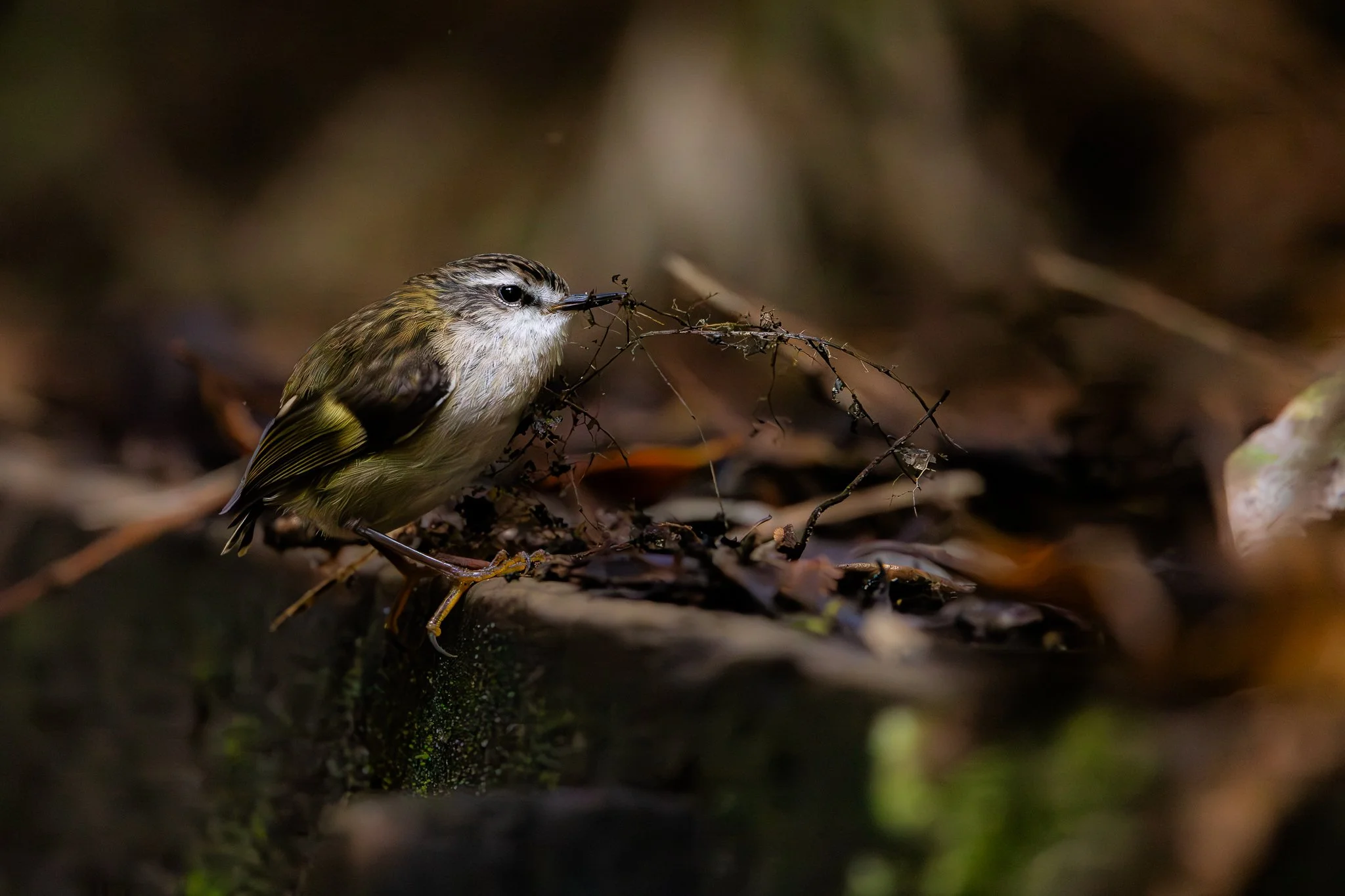
I had timed my visit to Ulva Island to coincide with the start of the breeding season for many of the forest birds. It was incredible to watch so many species busy preparing for the months ahead, including this Tītīpounamu gathering nesting material. [1/1000, f/7.1, ISO 25600]
But one of the things that impressed me most about Ulva Island wasn’t just the wildlife, it was the forest itself. Ulva Island has never been commercially milled, meaning the large old-growth podocarps, including southern rātā, rimu, kahikatea, and miro, still dominate the canopy and emergent layers. These ancient trees provide critical resources for many species, including the cavities needed by cavity-nesting birds such as kākā and ruru.
The understory was equally impressive. Without the browsing pressure from introduced ungulates, the forest floor was an absolute treasure trove of plant diversity. While reading one of the information signs, I discovered one of my now favourite plant species- Tmesipteris tannensis. This prehistoric, bright green vascular fern is sometimes referred to as the “dinosaur plant” due to its connection to some of the earliest plants to evolve leaves, around 400 million years ago. As soon as I read this, I knew I had to find and photograph it.
With limited phone reception, I jumped onto iNaturalist to try and locate a potential spot on the island. After eventually finding enough signal to load the information, I found a location close to the track and quickly made my way there before my ferry arrived. Thankfully, I made it in time and managed to find the plant.
I was genuinely excited to photograph this species, not only because of its incredible evolutionary history, but also because it was a refreshing change from the fast-moving wildlife subjects I’m usually after with a camera. Spending time focusing on a plant and appreciating the smaller details of the ecosystem was a really enjoyable experience.
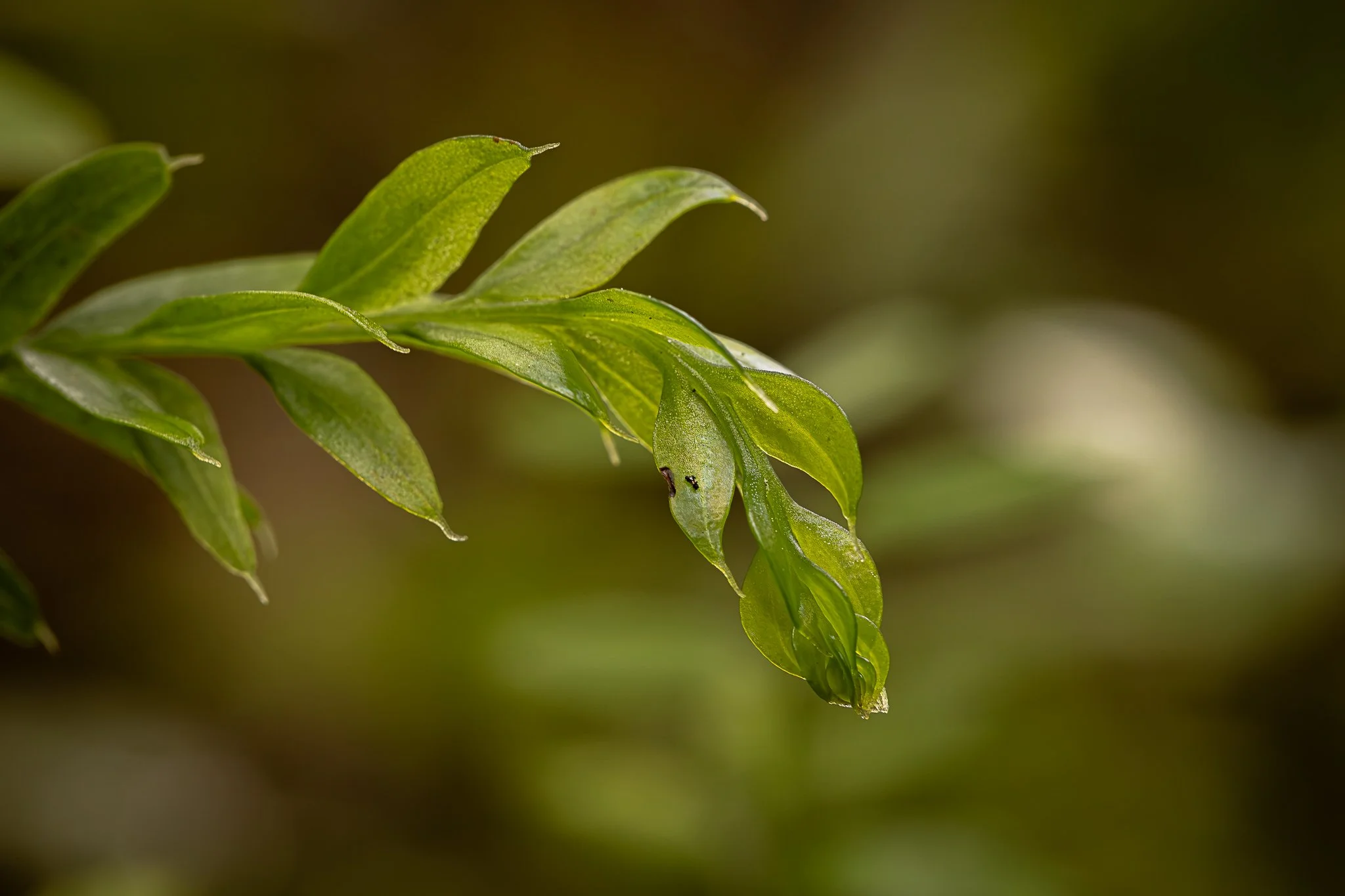
Tmesipteris tannensis, or as it is more commonly known, the ‘Dinosaur Plant’. One unexpected, yet very interesting find on the Island. [1/25, f/8.0, ISO 2500]
So, it’s safe to say my time on Ulva Island was unforgettable. Not only because of the incredible amount of wildlife I encountered, but also because I was able to witness the extraordinary diversity of plant life that this sanctuary has protected.
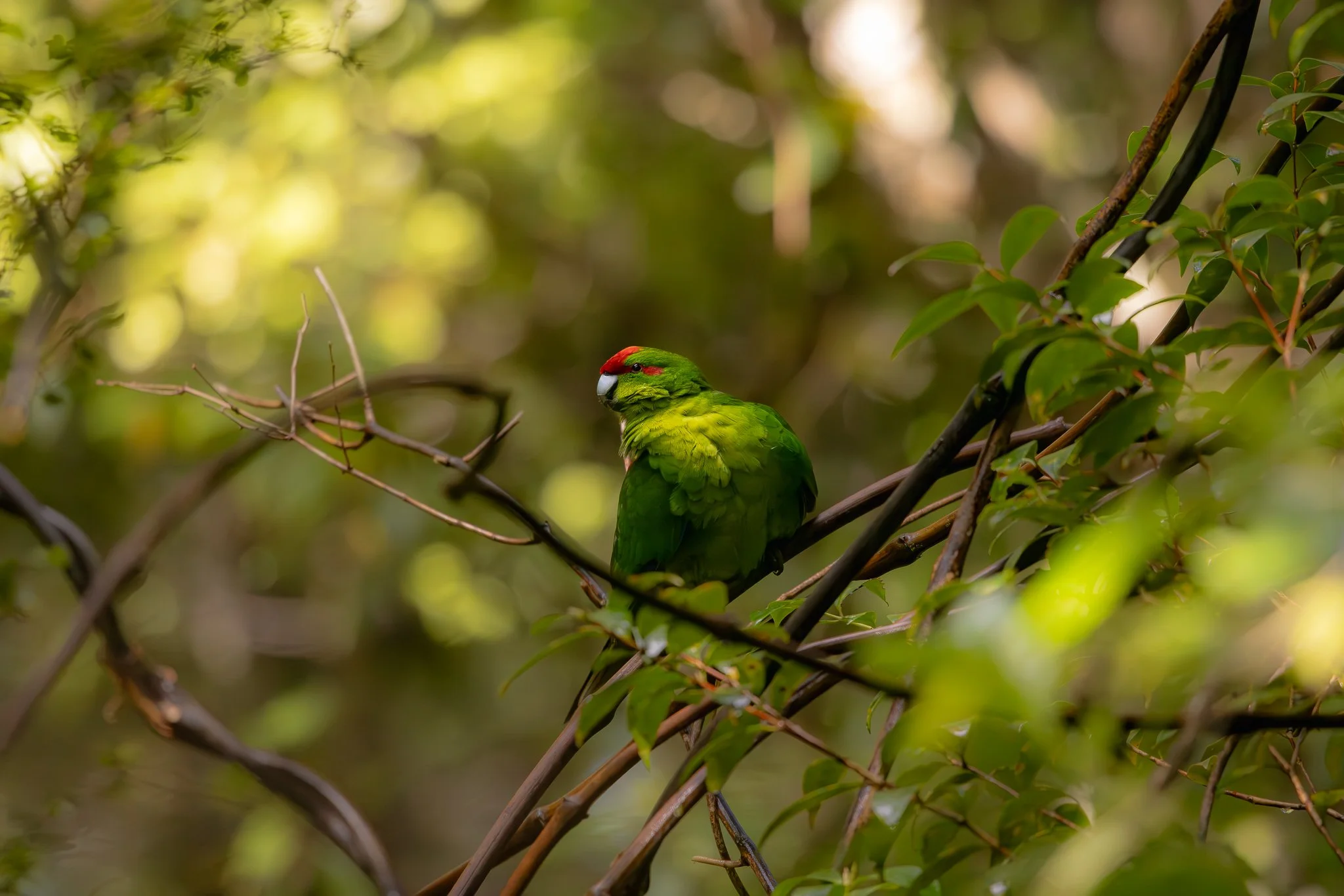
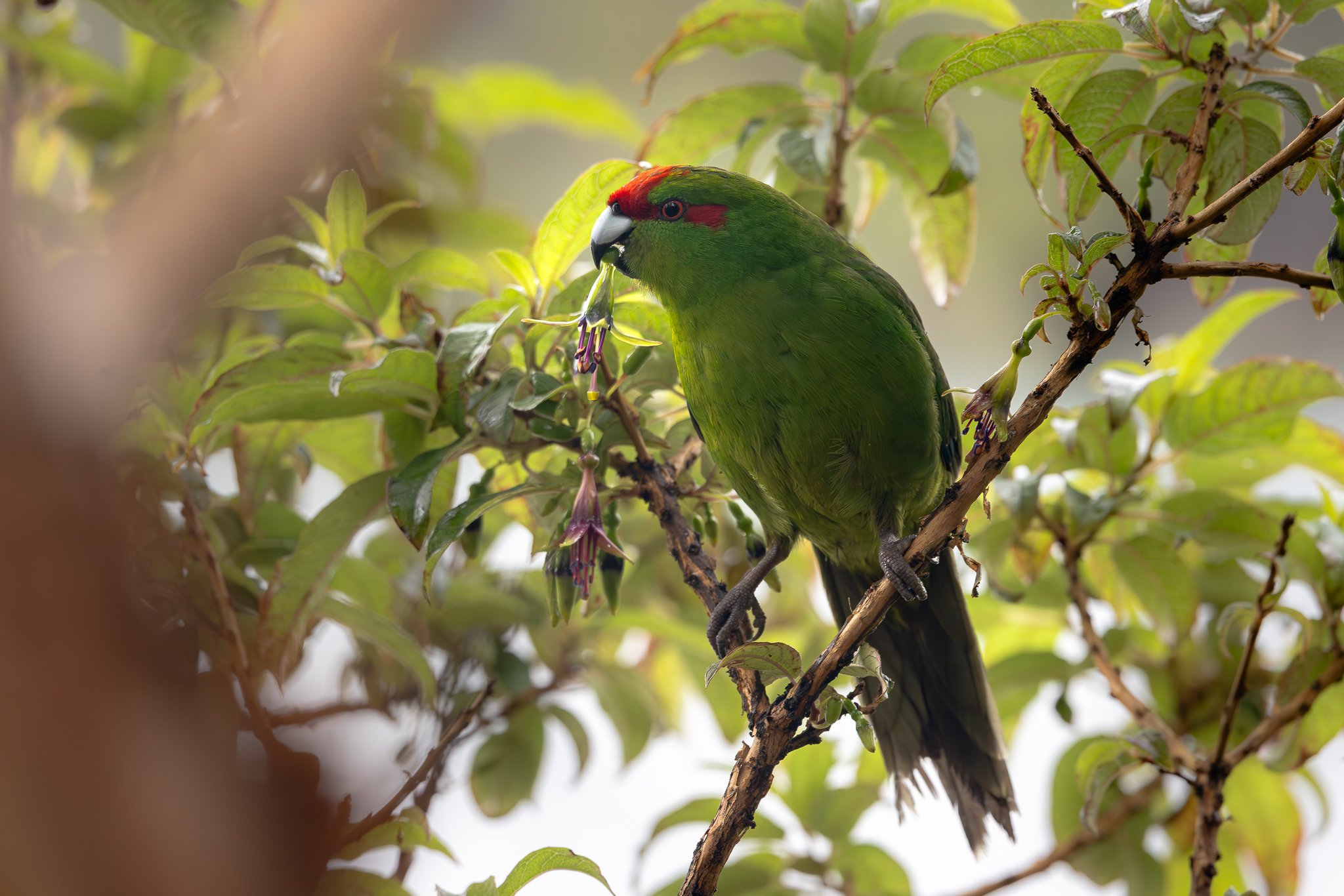
Kākāriki, or red-crowned parakeets, were a common sight across both Rakiura and Ulva Island. It was incredibly exciting to see them in such healthy numbers, offering a small glimpse into what their populations may once have looked like before the arrival of introduced predators. Encounters like these are a powerful reminder of what effective conservation can achieve. [1/1600, f/7.1, ISO 12800]
Unfortunately, this also meant my time on Rakiura was coming to an end. I had the most incredible experience and still find it hard to comprehend the amount of biodiversity I encountered, as well as the amazing people I met along the way. I explored most of the tracks around Oban and Ulva Island, which resulted in me being so exhausted that I fell asleep on the usually notoriously rough ferry ride back across the Foveaux Strait.
But despite covering so much ground, I still feel like I have only scratched the surface of what Rakiura has to offer. The daytime kiwi encounter still eludes me, and there are countless more threatened and elusive species waiting to be found deeper in the backcountry. So, without a doubt, I’ll be back. Hopefully next time I can venture further into the island’s wilderness and continue exploring one of the most special places Aotearoa has to offer.
If you'd like to learn more about the conservation work taking place on Rakiura and Ulva Island, their history, or some of the incredible species I encountered during my trip, check out the links I've included below.